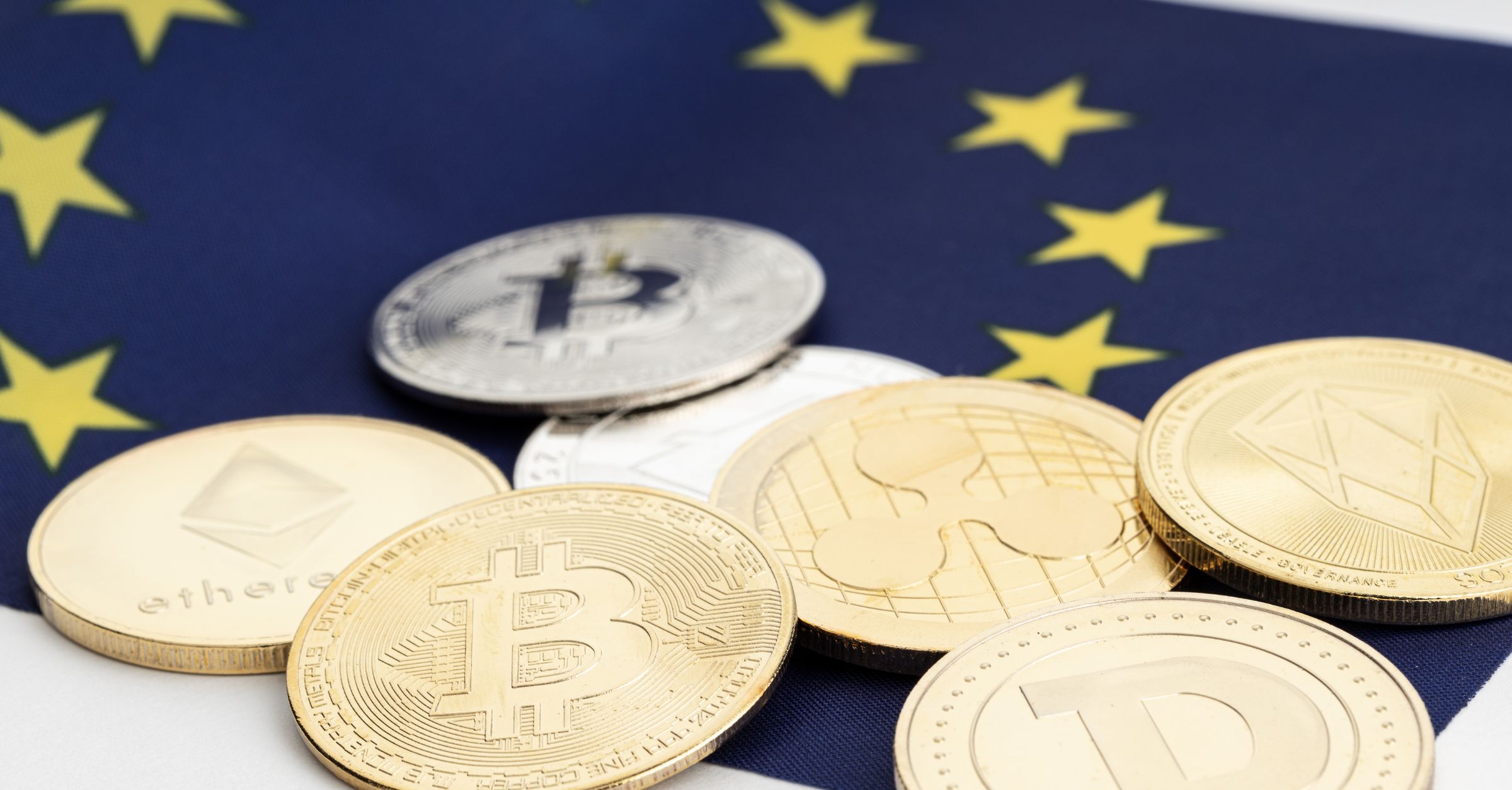

In an economic environment marked by persistent inflation, financial market volatility, and geopolitical uncertainty, corporate treasury management has become a major strategic challenge. Traditional investments, such as cash reserves, short-term bonds, and term accounts, struggle to preserve the purchasing power of capital over the long term.
Within this context, a question is progressively emerging in finance departments: should new assets be integrated into the balance sheet to reinforce the company's financial resilience?
For several years, Bitcoin has established itself as an alternative studied by a growing number of economic actors. Initially perceived as a speculative asset, it is now considered by certain corporations as a potential store of value, or even a strategic diversification tool.
This evolution is not a mere passing trend, but a profound transformation of the digital economy and capital management. With over 1.2 million BTC currently held by corporations worldwide, this dynamic confirms an accelerating adoption curve that is embedding itself permanently into corporate financial strategies.
But beyond the figures, an essential question remains: can Bitcoin truly fit into a long-term strategy for European corporations?
A Macroeconomic Context Forcing a Rethink of Treasury Management
For a long time, treasury management relied on a simple principle: preserve capital, ensure liquidity, and avoid risk. Today, this paradigm is being challenged.
The structural inflation observed for several years acts as a silent tax on businesses. Keeping significant liquidity in low-yield accounts amounts, in practice, to accepting a progressive erosion of capital. In an environment where real yields remain low or negative, the very notion of a risk-free investment becomes relative.
This shift forces finance departments to evolve. The role of the Chief Financial Officer is no longer limited to protecting treasury, but optimizing it within a strategic framework. This requires balancing multiple dimensions: liquidity, yield, volatility, and the investment horizon.
In this search for balance, a new category of assets is emerging: digital assets. In Europe, their adoption is progressing, though it remains behind other economic zones. This dynamic nevertheless fits into a structural trend: corporations are seeking to diversify their reserves beyond traditional instruments. Within this context, Bitcoin appears as a unique candidate: neither equity, nor bond, nor traditional currency. It is an asset apart, forcing a rethink of conventional analytical frameworks.
Bitcoin as a Strategic Asset: A Structured Analysis
A Programmed Scarcity in an Inflationary World
One of the fundamental characteristics of Bitcoin lies in its scarcity. Unlike fiat currencies, whose money supply can be adjusted by central banks, Bitcoin relies on an unalterable rule: a maximum supply of 21 million units.
This principle, hardcoded into its protocol, creates a unique form of predictability in the financial system. Approximately every four years, an event called the halving cuts the creation of new bitcoins in half. This mechanic progressively reinforces the asset's scarcity. In a world where expansionary monetary policies have become the norm, this characteristic catches the attention of corporations seeking protection against monetary devaluation.
Accelerating Institutional Adoption
Bitcoin is no longer a marginal topic. It is now studied, tested, and sometimes integrated by companies of all sizes. Certain publicly traded corporations have even structured their entire business strategy around this asset, helping legitimize its role in modern finance.
This dynamic extends far beyond tech companies. It now touches varied sectors, from SMEs to multinational corporations. Adoption is not uniform, but it is clearly underway. More broadly, the ecosystem has professionalized: custody infrastructures, compliance solutions, and the European regulatory framework with MiCA. All of these elements are progressively lowering the barriers to entry for corporations.
An Asset Still Volatile, But Maturing
It would be imprudent to present Bitcoin as a stable asset. Its volatility remains high, particularly in the short term. Price variations can be significant and, at times, abrupt.
But this volatility must be analyzed with nuance. It partly reflects a maturation phase. As adoption progresses and institutional actors enter the market, this volatility tends to structure itself. For a corporation, this implies a specific approach: Bitcoin is not conceived as a short-term placement, but as a strategic asset with a long-term horizon.
A Leverage for Diversification
From an asset management perspective, Bitcoin presents a particular interest: its correlation with traditional markets remains variable and partial. This means it can play a diversification role in a corporate portfolio, not by replacing existing assets, but by complementing them. This logic is central: it is not about betting on Bitcoin, but integrating it as an additional brick within a global allocation.
Integrating Bitcoin into a Corporate Strategy
What Role Within the Treasury?
The question is no longer whether to look into it, but rather what allocation to accord it. In practice, corporations that take the step generally adopt a measured approach. Observed allocations often sit between 1% and 10% of available cash, depending on the risk profile and financial structure. A progressive approach is often preferred, as it smooths out entry points and reduces exposure to volatility.
Regulated Deployment Methods
Contrary to certain misconceptions, integrating Bitcoin into a corporate framework is now structured and regulated. Two main approaches exist:
- Direct investment via the operational company
- Investment via a dedicated holding company
On the accounting and fiscal front, clear frameworks exist, allowing for compliant and transparent integration. The European regulatory framework, reinforced by MiCA, provides an additional layer of security. It helps professionalize the ecosystem and reassure economic actors.
Use Cases Beyond Pure Investment
Reducing Bitcoin to a mere financial asset would be restrictive. Certain corporations also use it to:
- Facilitate international payments
- Reduce cross-border settlement times and transaction costs
- Position themselves as innovative actors
While these use cases remain marginal for now, they illustrate the broader potential of this technology in the real economy.
Risks to Manage
Like any asset, Bitcoin carries risks. Ignoring them would be a strategic error. The primary points of attention are price volatility, asset securing, and internal governance and decision-making processes.
These risks do not render the asset unsuitable. They simply mandate a rigorous, structured, and guided approach.
Toward a New Financial Standard?
Bitcoin is progressively establishing itself as an unidentifiable financial object that has become unavoidable. Neither traditional currency nor classic asset, it opens a brand-new category in treasury management. Its adoption by corporations remains uneven, particularly in Europe. But the trend is clear: the actors looking into it are no longer doing so out of opportunism, but out of strategy. The question is no longer whether Bitcoin will establish itself in the financial landscape, but at what pace, and with what intensity, each corporation will choose to expose itself.
Key Takeaways:
- The macroeconomic context weakens traditional corporate treasury strategies.
- Bitcoin emerges as a credible diversification asset.
- Its utility relies on a long-term vision, not a speculative one.
- Integration must be progressive and structured.
- Europe possesses a clarifying regulatory framework, though it is still in its adoption phase.
FAQ
Is it legal for a French company to buy and hold Bitcoin?
Yes. A corporate entity in France has the legal right to acquire and record digital assets on its balance sheet. The transaction must be accounted for according to the rules of the ANC (Autorité des Normes Comptables). To guarantee full compliance, it is imperative to use an intermediary registered as a PSAN with the AMF, such as Paymium.
How is Bitcoin treated from an accounting perspective at the closing of the fiscal year?
According to French standards, digital assets are evaluated based on their attached rights and intent of use. For corporate treasury holdings recorded as intangible assets, if the market price of Bitcoin drops below its net book value at the closing date, the company must record a provision for depreciation. Conversely, a price increase is not recorded as an unrealized gain, thereby avoiding premature taxation.
What maximum allocation is generally recommended for an SME?
Prudence suggests allocating between 1% and 5% of long-term available capital. This measured exposure introduces a genuine diversification that is uncorrelated with classic markets, without weakening the working capital or the operational activity of the firm.
Is it better to invest via the operational company or create a dedicated holding company?
Both approaches are viable. Investing via the operational company is technically the simplest but exposes the assets to operational business risks. Moving through a dedicated wealth holding company allows you to segregate risk, facilitate long-term management, and optimize taxation in the event of reinvestment.
What are the advantages of Bitcoin for a company outside of financial placement?
Certain companies use Bitcoin as an operational tool to facilitate international payments, reduce processing times and cross-border transaction costs, or position the brand as an innovative player for tech-savvy clientele.