
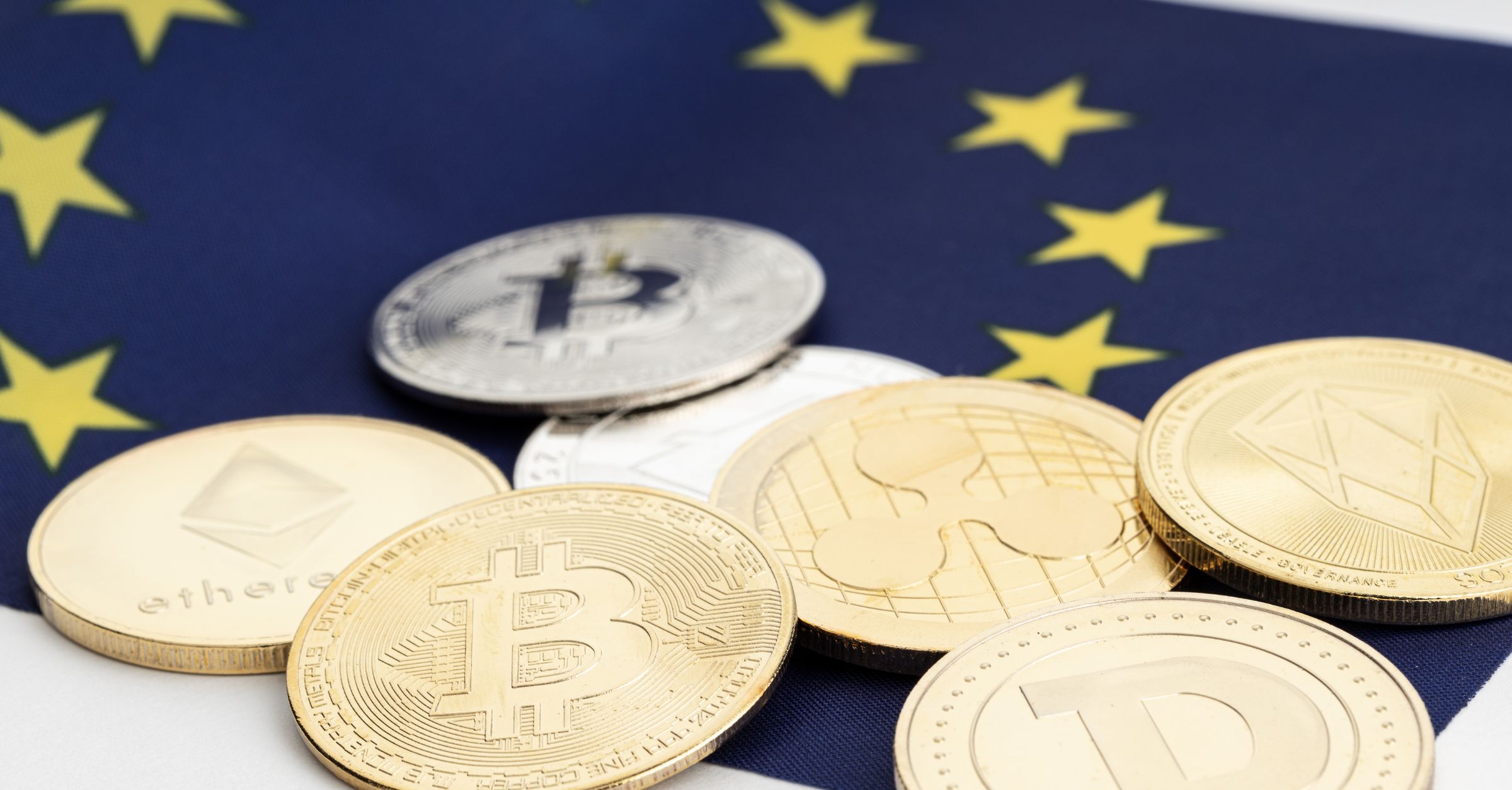
Investing in Bitcoin is not just about choosing an asset; it is equally about choosing an infrastructure, a legal framework, and a level of consumer protection. These parameters vary significantly depending on the geographical and regulatory baseline of your chosen partner.
Following the collapse of major global, unregulated exchanges, the issue of counterparty risk has taken center stage. Holding Bitcoin delivers no practical security if the intermediary managing your access points is fragile, opaque, or operating outside structural supervision.
Within this landscape, Europe has distinguished itself through a highly structured method, driven notably by the Markets in Crypto-Assets (MiCA) regulation, designed to oversee service providers and reinforce investor protections. Concurrently, the parameters of digital and financial sovereignty are taking on critical importance in an increasingly volatile global geopolitical climate. Recent industrial data demonstrates that the Web3 ecosystem is now viewed as a vital lever to protect European competitiveness and economic autonomy.
Consequently, a definitive question emerges: beyond the performance of Bitcoin itself, has the choice of your financial intermediary become the single most critical factor determining your capital's safety?
An Environment Defined by Rising Macro Risks and Sovereignty Demands
The Collapse of the Global Exchange Safety Illusion
For an extended period, retail and corporate access to Bitcoin was dominated by massive global platforms. These entities were routinely assumed to be safe simply due to their sheer transactional volume, user growth, and aggressive international marketing. This footprint established an implicit trust: if an operator is globally recognized, it is assumed to be financially sound.
Recent market events have shattered this assumption. When several top-tier global platforms abruptly froze user withdrawals, halted operations, and entered bankruptcy, investors learned a harsh financial lesson: their portfolio was not merely exposed to Bitcoin's price volatility, but entirely dependent on the operational solvency of the intermediary.
This realization marks a fundamental shift in risk analysis. Real risk no longer resides exclusively inside the open-market price swings of Bitcoin; it encompasses the systemic infrastructure of the exchange you deploy. Capital isolation, structural transparency, and strict regulatory compliance are now just as critical as raw market performance.
The Strategic Mandate of European Financial Sovereignty
Beyond individual wealth protection, a macroeconomic dimension has set in: regional sovereignty. The digital financial economy, powered by blockchain networks, is actively rewriting global economic influence. The core infrastructures that allow human beings and corporations to purchase, secure, and transfer tokenized value are transforming into critical strategic assets.
Currently, a disproportionate share of these digital rails is commanded by entities outside European jurisdiction. This deep reliance introduces a structural vulnerability: where does the ultimate legal and operational control of European capital reside?
Sector data highlights this lack of domestic autonomy. Within the European ecosystem, only a small portion of early-stage Web3 startup funding originates from domestic European venture capital, compared to a massive domestic funding rate within the United States. This structural imbalance directly impacts long-term innovation capacity, the regional retention of technical talent, and Europe's ultimate command over tomorrow's financial plumbing. Choosing a European partner moves beyond geographical preference (it actively finances regional economic autonomy).
The Tangible Security Delivered by a Regulated European Partner
The MiCA Regulation: A New Global Financial Standard
With the comprehensive enforcement of the European MiCA framework, Europe establishes a definitive global milestone in the codification of the digital asset industry. The core intent of this single rulebook is not to stifle technological innovation, but to architect a transparent, high-security financial theater capable of seamlessly welcoming retail savers and institutional allocators alike.
This framework subjects service providers to a rigorous matrix of corporate mandates: absolute transparency of operations, advanced mathematical risk-management protocols, transparent corporate governance, and continuous regulatory auditing. In practical execution, accessing Bitcoin through a MiCA-compliant partner ensures you trade within a standardized playground where the rules of engagement are clearly hardcoded, severely restricting the opaque, manipulative practices that ran rampant across loosely monitored jurisdictions.
Enforced Asset Segregation and Protection
The primary structural advantage of utilizing a locally regulated provider is the legal definition of asset custody. Unlike unregulated offshore platforms that routinely commingle corporate funds with user balances, European digital asset managers must mandatorily enforce strict asset segregation. Your capital is held entirely separate from the platform's corporate balance sheet.
This absolute separation is a powerful safeguard: if the platform faces an independent corporate financial crisis, its client digital reserves remain entirely ringfenced, protected from corporate creditors, and un-touchable. Backed by strict Anti-Money Laundering (AML) and Know Your Customer (KYC) compliance checkpoints, these frameworks ensure that maximum security is a non-negotiable legal obligation.
On Paymium, for example, 98% of client funds are kept entirely offline in cold storage, firewalled away from cyber threats. This operational architecture lines up with the pioneering history of the platform, which has operated continuously out of Paris since 2011.
Legal Recourse and Jurisdictional Security
A frequently underappreciated asset of the European framework is its robust legal predictability. Investing through a fully compliant domestic partner means your capital operates in an ecosystem where:
- The statutory guidelines are clearly mapped out.
- Corporate and executive liabilities are explicitly defined under civil law.
- Legitimate channels of immediate legal recourse are accessible to the user.
In the event of an operational dispute, account anomaly, or platform friction, you are not left isolated facing an unpredictable, distant court in an offshore tax haven. You operate under a protective legal framework closely supervised by national regulators like the French AMF. Conversely, routing capital through international offshore entities leaves your wealth subjected to volatile legal voids where recovery is notoriously expensive, complex, and structurally weighted against the saver.
Practical Implications for Individual and Corporate Allocators
A Transparent, Frictionless Private Saver Experience
For an individual retail saver, relying on a European partner translates directly into administrative simplicity. The user interfaces, tax reporting documentation, and portfolio compliance certificates are natively engineered to align with your domestic legal environment.
This structural alignment eliminates operational friction, enabling you to focus exclusively on executing your long-term cost-averaging or wealth-building strategies. Furthermore, it completely immunizes you from catastrophic account freezes or sudden banking roadblocks that routinely occur when traditional retail banks detect outbound wire transfers migrating toward unvetted offshore platforms.
An Institutional-Grade Corporate Treasury Engine
For corporate entities, holdings, and asset managers, the intermediate choice is even more decisive. Integrating Bitcoin as a strategic corporate treasury reserve requires an infrastructure that seamlessly interfaces with standard corporate accounting, national tax compliance, and rigorous auditing workflows.
Globally, corporate entities and institutional funds collectively command more than 1.2 million BTC on their balance sheets, illustrating that digital scarcity has successfully transitioned into a corporate treasury reality. Deploying a licensed European partner unlocks:
- Flawless compliance integration into corporate balance sheets under explicit accounting standards.
- Simplified, transparent relationships with commercial banking partners.
- Hands-off corporate fiscal tracking.
Bitcoin is no longer just an experimental asset; it functions as a verified instrument of sophisticated corporate financial management.
Aligning Your Intermediary with Your Investment Timeline
Ultimately, selecting your exchange partner represents a core strategic arbitrage. Certain short-term speculators may continue to chase offshore platforms that offer complex derivative instruments, massive margin leverage, or unvetted altcoin listings.
Conversely, long-term wealth allocators, operating with a multi-decade horizon, demand a stable, legally predictable, and highly transparent framework. A long-term wealth strategy naturally prioritizes infrastructural robustness over speculative features, making the European regulatory shell the ideal environment to build digital wealth steadily.
Security, Compliance, and Sovereignty as New Core Metrics
Bitcoin is fundamentally celebrated as a highly decentralized network, mathematically independent of sovereign states and central banking institutions. However, this elegant software reality must never obscure a practical fact: human access to this decentralized ledger relies entirely on tangible physical and digital infrastructures.
These trading platforms, liquidity desks, and custody vaults exist inside real-world legal jurisdictions, subject to local statutory codes. Consequently, investing in Bitcoin requires an equally rigorous analysis of your chosen execution environment. This environment dictates:
- Your explicit level of consumer capital protection.
- The raw accuracy and auditability of corporate reserves.
- Your direct capacity for legal recourse during a structural crisis.
Within this framework, European regulated actors deliver an un-compromised value proposition: frictionless, institutional-grade access to Bitcoin wrapped inside a transparent, compliant, and legally secure architecture that mirrors the highest standards of traditional finance.
Key Takeaways:
- The choice of where you source and store your Bitcoin is just as critical to wealth preservation as the decision to allocate capital to the asset.
- The European MiCA framework enforces absolute client asset segregation, protecting user digital reserves from corporate platform liabilities.
- Relying on locally registered and licensed entities removes transaction friction with traditional commercial banks, eliminating arbitrary wire blocks.
- Offshore, unregulated platforms expose allocators to massive jurisdictional hazards and eliminate practical legal recourse channels during insolvencies.
FAQ
How does the MiCA regulation concretely protect my Bitcoin investment?
The European MiCA regulation binds digital asset platforms to strict corporate obligations that mimic traditional banking safety standards. It completely outlaws the utilization of client funds for the platform's independent corporate activities (mandatory segregation of assets), enforces robust minimum capital and liquidity reserves, and subjects corporate executives to continuous external audits. This completely eradicates the operational opacity and fund mingling that triggered the catastrophic insolvencies of unregulated offshore global exchanges.
What specific advantage does a regulated platform deliver over an unregulated broker?
A platform holding a valid regulatory license with national authorities provides empirical proof that the entity adheres to strict standards regarding cybersecurity infrastructure, data protection privacy, and anti-money laundering compliance. Operating within this framework provides seamless capital routing, preventing commercial retail banks from locking down your bank accounts when you execute incoming or outgoing wire transfers, as the financial source of wealth is already vetted and certified.
Is it genuinely risky to use a digital asset exchange located outside the European Union?
Yes. The legal, operational, and counterparty risk profiles are substantially higher. In the event of a platform exploit, an arbitrary account freeze, or an intermediary insolvency on an offshore or un-supervised global platform, European regulatory and judicial authorities hold zero legal jurisdiction or power to intervene on your behalf. Your path to legal recourse is entirely subjected to the local laws of a distant jurisdiction, a process that is routinely cost-prohibitive, complex, and highly unfavorable to retail savers.
Are transaction fees noticeably higher on a fully regulated European platform?
Not necessarily. While maintaining institutional regulatory compliance and state-of-the-art security systems carries real operational costs for European firms, transaction fees remain highly competitive against global offshore entities. More importantly, any minor fee spread represents the insurance premium for absolute legal predictability, local customer support desks, and the ironclad guarantee that your underlying digital wealth is physically and cryptographically isolated inside the secure legal architecture of the European Union.