For a long time, saving was almost a reflex: set aside a portion of your income, place it in secure vehicles, and let time do its work. This model functioned in an environment where monetary stability was taken for granted.
But over the past few years, a discrete shift has taken place.
Inflation has returned, economic balances are evolving, and above all, a reality is progressively making itself clear: keeping your savings entirely in traditional currency no longer guarantees its preservation. The balance displayed on an account can remain identical, while its capacity to purchase goods or services diminishes.
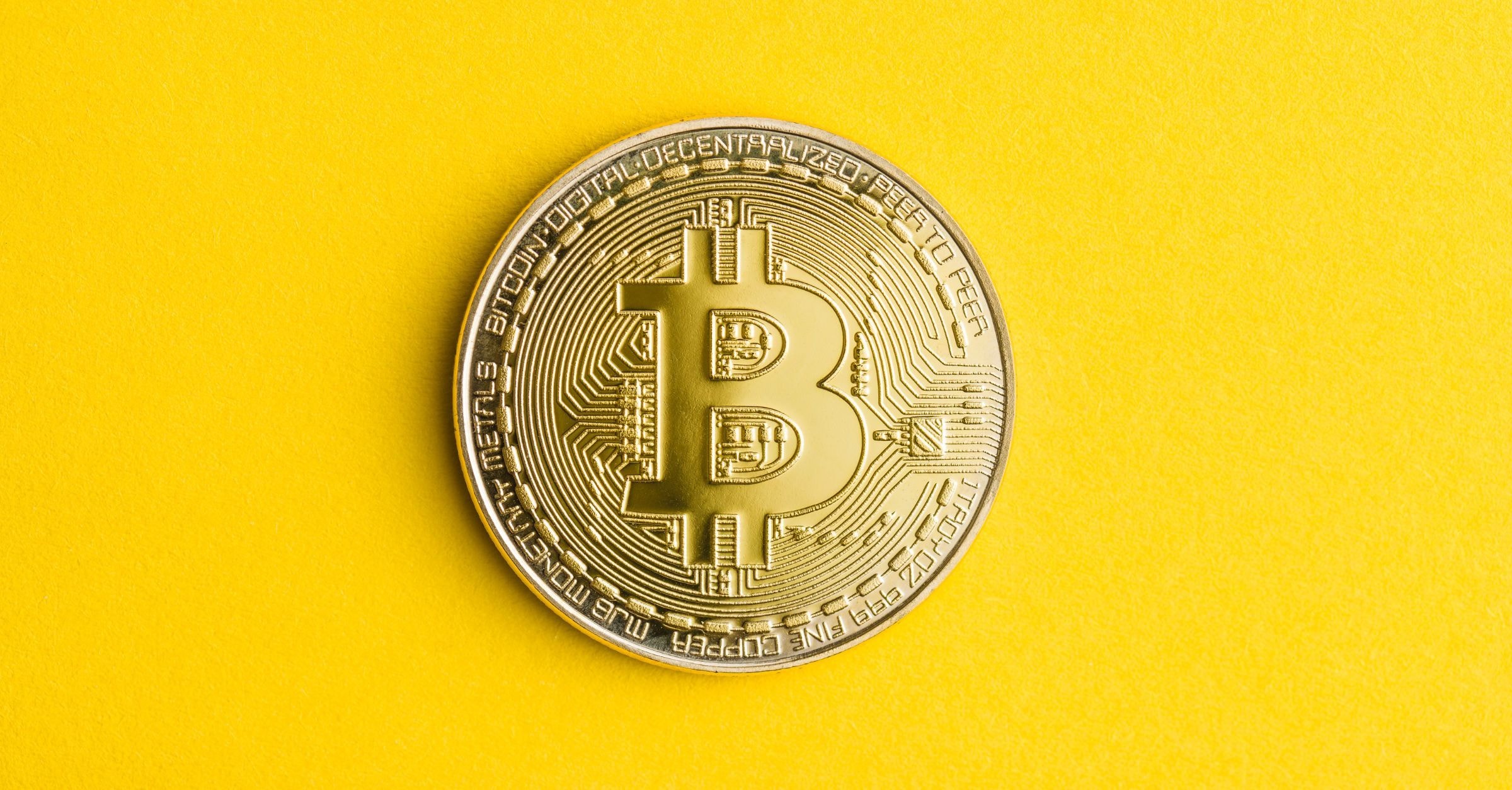
It is within this context that Bitcoin is attracting growing attention—not as a quick-gain promise, but as a viable alternative within a savings strategy.
An essential question remains: how do you begin without getting lost or taking excessive risks?
Why More and More Savers Are Looking into Bitcoin
An often invisible loss of purchasing power
One of the pitfalls of traditional savings is its apparent stability. A capital amount can seem intact while its real value slowly degrades.
An account displaying €10,000 today will still display that exact amount tomorrow. Yet, what that sum allows you to buy changes. The cost of living rises—sometimes diffusely, but continuously. This erosion is not brutal; it is progressive, silent, and frequently underestimated.
In this context, prudence no longer simply means avoiding risk. It also means recognizing that doing nothing can be a risk in itself.
A fundamental difference: scarcity
Where traditional currencies can be issued according to economic needs, Bitcoin introduces a different logic with a strictly limited supply.
This rule is mathematical; it is not political. It is written into its very operation.
While this does not guarantee a price increase, it profoundly changes the nature of the asset. For the first time in the history of money, a saver can access an asset whose final quantity cannot be modified.
How to Start Without Taking Excessive Risks
Do not chase the “right time”
When starting out, one question comes up systematically: should you wait before investing?
In practice, searching for the ideal moment is rarely effective. Markets are unpredictable, and waiting can become a permanent brake. The risk is not just investing badly; it is also never starting at all.
Recurring purchases: a simple and disciplined approach
To overcome this hesitation, one method stands out naturally: regular accumulation.
Instead of investing a large lump sum all at once, the saver chooses to allocate a fixed amount at regular intervals. This can be every month or every week, depending on their habits. This approach profoundly changes the way you invest.
- Removes timing stress: The saver no longer needs to constantly decide whether to buy or wait. It transforms the investment into a habit, closely mimicking a traditional savings plan.
- Smoothes market exposure: Some purchases will happen at higher prices, others at lower prices, but over time, this results in a more balanced average cost basis.
- Aligns with long-term logic: If you consider this asset a long-term component, it is logical to integrate it progressively rather than chasing a perfect entry.
Regular purchasing does not eliminate risk, but it makes it more manageable and compatible with a wealth management approach.
A measured allocation to maintain peace of mind
Starting out does not mean exposing yourself heavily.
A moderate allocation, generally between 1% and 5% of your total wealth, allows you to introduce Bitcoin without unbalancing your entire savings structure. This proportion has a simple advantage: it limits the downside impact of a drop while allowing you to benefit from eventual long-term growth. It is a way to test, understand, and adapt progressively.
Learning to live with volatility
Bitcoin remains a volatile asset. Significant variations can occur, sometimes in a short period of time. This reality can be destabilizing if you reason in the short term.
But it becomes more comprehensible if you shift your perspective: Bitcoin is still in an adoption phase, and its price reflects this transition. For a saver, the goal is not to avoid these variations, but to integrate them into a coherent strategy. This requires prioritizing a long-term vision and refusing to react to daily fluctuations.
Security: A Decisive Step
Choosing a regulated framework
The choice of platform is essential. In an environment with many players, prioritizing a regulated framework reduces operational risks.
In France, platforms registered as a PSAN with the AMF offer a higher baseline of security and transparency. This framework does not remove market risks, but it constitutes a solid foundation for beginners.
An accessible process
Buying Bitcoin today has become simple, with a process very close to utilizing an online banking service. Once the account is created and verified, the saver can deposit funds and complete a first purchase in just a few steps. This simplicity is exactly what allows for a progressive approach, without any pressure.
Moving Forward Progressively Rather Than Remaining Immobile
Beginning with Bitcoin does not mean sabotaging your savings or taking inconsiderate risks. It means recognizing that the economic context is changing, and that remaining entirely exposed to a single system can have its limits.
Introducing Bitcoin into your savings, even modestly, amounts to diversifying your reference points—not out of absolute conviction, but out of pragmatism. The most solid strategies are not those that attempt to predict everything, but those that move forward with method.
Starting small, understanding progressively, and adjusting over time is how durable decisions are built.
Key Takeaways :
- Security: Only use platforms regulated by the AMF.
- Regularity: Automate your purchases so you no longer have to think about them.
- Long term: Your horizon must be counted in years, not in days.
FAQ
Why prefer Bitcoin over a Livret A if the capital is not "guaranteed"?
The Livret A guarantees the number of euros you hold, but not what you can actually buy with them. If inflation is higher than the savings account rate, you lose purchasing power. Bitcoin does not guarantee its short-term price, but its mathematical scarcity aims to preserve value over the long term, whereas the euro is structurally designed to lose value over time.
How can "digital scarcity" protect my savings?
It is a matter of supply and demand. Unlike traditional currencies that central banks can print without limit, there will never be more than 21 million bitcoins. This physical limit (written into the code) prevents the dilution of your savings: no one can "create" new bitcoins to bail out debts.
Is it the right time to start if the price has already gone up a lot?
For a savings strategy, today's price matters less than the trend over 5 or 10 years. By investing small amounts regularly (the smoothing method), you remove the pressure of finding the "right time." You buy when it is high, but also when it is low, which balances your average cost price.
Can Bitcoin replace all of my savings?
Prudence remains the golden rule. Bitcoin must not replace your emergency fund (the cash used to pay for a sudden car repair or an emergency). It acts as a diversification element. The idea is to allocate a reasonable portion of your wealth (often between 1% and 5%) to benefit from its scarcity without putting your daily financial security at risk.
What happens to my savings if the Bitcoin network stops?
The network has operated without interruption since 2009. It does not depend on any company or government, but on thousands of computers all over the world. For it to stop, it would require a total, global shutdown of the internet and electricity. Today, it stands as one of the most secure and resilient computer networks in the world.