
Since the sharp return of global inflation from 2021 onward, one reality has become undeniable: money is not a neutral asset. Across both the Eurozone and the United States, rising consumer prices have delivered a stark reminder to savers and corporate executives alike that holding raw cash inevitably guarantees a structural loss of purchasing power.
In this context, the hunt for defensive wealth shelters has intensified. However, traditional safe havens, such as real estate, equities, or physical gold, have all revealed distinct limitations, particularly inside macroeconomic environments marked by rapid, aggressive interest rate hikes.
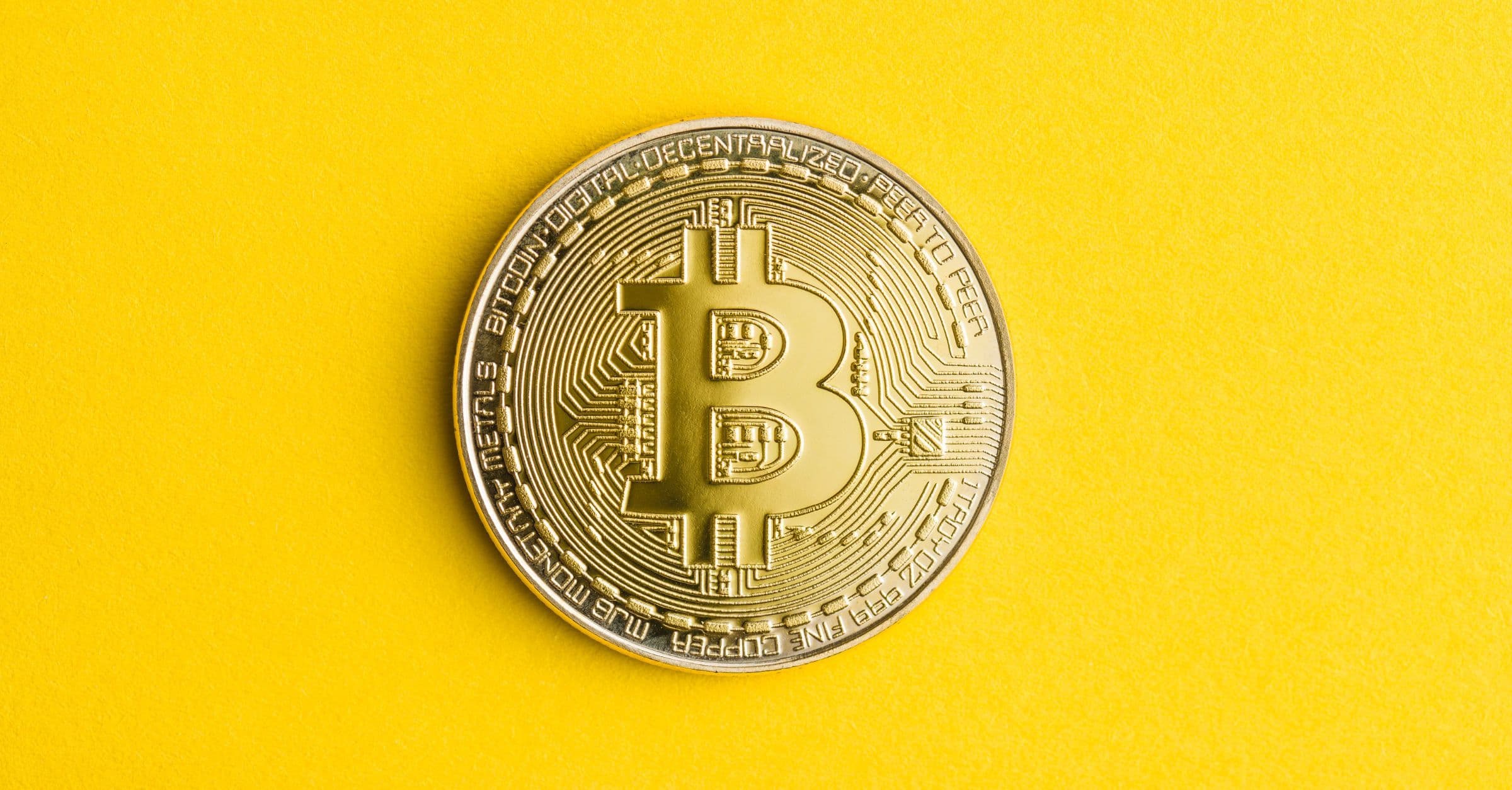
This shift is precisely where Bitcoin has firmly anchored itself in the macroeconomic debate. Presented as a mathematically finite, decentralized asset immune to central bank manipulation, it is frequently termed "digital gold." Yet, this structural promise demands rigorous economic analysis.
Does Bitcoin truly shield wealth from inflation, or are we looking at an appealing but incomplete narrative? To answer this objectively, we must look beyond common biases and analyze the underlying market forces at play.
The core question is not merely: Does Bitcoin protect against inflation? Rather, it is far more fundamental: What does inflation reveal about our current monetary system, and why does Bitcoin exist within this exact context?
Inflation and the Loss of Purchasing Power: A Structural Phenomenon
Official Inflation vs. Real Inflation
Inflation is universally quantified through consumer price indexes like the CPI. However, these aggregate baskets frequently obscure a much more complex reality.
On one hand, true monetary inflation stems directly from the rapid expansion of the global money supply (M2), which accelerated heavily during the 2008 financial crisis and exploded to unprecedented heights during the 2020 pandemic. On the other hand, the actual inflation experienced by an individual or business depends strictly on their specific basket of real-world expenditures, including rent, energy, and raw manufacturing materials.
This divergence explains why households and businesses routinely experience an erosion of purchasing power that far outpaces official government figures. Beyond how it is measured, the fundamental takeaway is clear: fiat currency is programmatically designed to lose value over time. This loss is not an accidental market anomaly; it is a feature built into the architecture of modern central banking.
Why Traditional Assets Can Face Structural Friction
When inflation spikes, capital traditionally rotates into three classic asset classes:
- Gold: Prized for its natural physical scarcity.
- Real Estate: Relied upon for its rent yields, which are typically indexed to consumer prices.
- Equities: Utilized for direct exposure to corporate productivity and real economic growth.
Yet, none of these solutions act as a flawless, immediate shield. Gold can undergo multi-year phases of stark underperformance. Real estate valuations are heavily dependent on credit costs, leaving them vulnerable when borrowing rates climb. Equities remain acutely sensitive to broader monetary tightening cycles, which compress profit margins.
When central banks aggressively raise interest rates to combat inflation, these asset classes can simultaneously face intense downward pressure. In short, inflation protection is never automatic.
The Core Vulnerability: Total Reliance on Monetary Expansion
For over five decades, the global financial engine has operated on a central pillar: perpetual monetary expansion. Low interest rates, continuous Quantitative Easing (QE), and systematic market bailouts have successfully stabilized short-term economic crises.
However, this architecture carries a massive structural side effect: the compounding dilution of the base currency unit. In this macroeconomic landscape, the challenge is no longer just shielding capital from rising consumer prices; it is shielding capital from the very monetary system that makes inflation inevitable.
Why Portfolio Diversification Has Become a Strategic Imperative
In a global environment defined by structurally low or deeply negative real yields (calculated as nominal interest rates minus the rate of inflation), historically unprecedented sovereign debt levels, and constant, systemic central bank interventions in capital markets, traditional asset diversification is no longer an optional optimization strategy; it is a survival mechanism.
This structural imbalance is exactly why digital assets, and Bitcoin in particular, have transitioned into mainstream financial consideration. They represent an alternative engineered to operate outside this specific cycle.
Bitcoin vs. Inflation: A Nuanced, Distinct Protection Profile
An Asset Engineered Against Monetary Expansion
Bitcoin operates on a hardcoded, unalterable programmatic rule: a total absolute supply capped at 21 million units. Unlike fiat currencies, no committee, central bank, or sovereign state can expand its supply to absorb a debt crisis.
Its issuance rate is fully transparent, predictable, and structurally decreasing over time via the "halving" mechanism, which cuts block rewards in half roughly every four years. This framework positions Bitcoin as a fundamentally unique asset: it is not "anti-inflation" in a classic sense, but it is entirely immune to artificial supply manipulation.
The Nuanced Empirical Reality
The classical economic thesis states that a strictly scarce asset should automatically appreciate as fiat currency devalues. In practice, however, the real-world data reveals a much more nuanced dynamic.
Bitcoin does not maintain a direct, linear correlation with consumer price index spikes, especially over short-term horizons. Instead, its price behavior reacts acutely to:
- Global liquidity flows (M2 expansion or contraction).
- Central bank monetary policies (interest rate cycles).
- Institutional risk appetite (risk-on vs. risk-off sentiment).
Consequently, when central banks react to high inflation by aggressively raising interest rates, global liquidity dries up. This liquidity squeeze can cause Bitcoin's price to drop sharply even while consumer prices remain elevated.
Strategic Takeaway: Bitcoin does not function as a tactical, mechanical hedge against short-term consumer price index changes.
Volatility: A Structural Defect or an Emerging Lifecycle Asset?
Bitcoin’s severe price swings are routinely highlighted as its primary flaw. However, looking closely at its architecture reveals that this volatility is a logical characteristic of an asset class undergoing real-time monetization:
- An ongoing global adoption curve.
- A market depth and liquidity pool that is still minor compared to traditional credit or real estate markets.
- High sensitivity to macroeconomic shifts and institutional capital rotations.
An asset can possess flawless long-term structural fundamentals while remaining intensely volatile over short-term horizons. For an investor, this means Bitcoin cannot be treated as a short-term tactical shelter, but rather as a long-term strategic allocation.
Bitcoin vs. Gold: A Data-Driven Comparison
While the "digital gold" analogy holds structural merit, the two assets exhibit vastly different market footprints.
Investment Attribute | Physical Gold | Bitcoin |
Historical Track Record | Over 5,000 years of established monetary history. | Emerged in 2009; a modern digital asset class. |
Market Volatility | Low to moderate; acts as a quiet portfolio stabilizer. | High; subject to intense multi-year market cycles. |
Supply Dynamics | Elastic: Supply expands by around 1.5% to 2% annually based on mining profitability. | Inelastic: Fixed hardcap of 21 million units; issuance rate is algorithmically unalterable. |
Global Adoption | Universal; held natively by central banks and sovereign reserves. | Ongoing; progressively integrating into institutional and corporate balance sheets. |
Physical Mechanics | Heavy, costly to secure, difficult to verify instantly, complex to split. | Weightless, borderless, instantly auditable on the blockchain, divisible to 8 decimals. |
Ultimately, Bitcoin can be analyzed as a highly optimized, infinitely more portable, but vastly more volatile version of gold, offering an asymmetrical growth profile.
Integrating Bitcoin Into an Anti-Inflation Strategy
For Individual Savers: Introducing Portfolio Asymmetry
For a retail individual, Bitcoin is not a replacement for traditional wealth-building blocks like real estate or global equities; it is an un-correlated complement. A robust, risk-adjusted approach relies on three core tenets:
- A highly controlled allocation: Typically restricted to a range between 1% and 5% of total wealth. This ensures that short-term corrections do not compromise daily financial security, while allowing the portfolio to benefit from long-term asymmetric upside.
- Regular, automated accumulation (DCA): Utilizing a Dollar-Cost Averaging strategy (such as an automated recurring purchase plan) to systematically smooth out purchase costs and eliminate emotional timing stress.
- A strict multi-year time horizon: Treating the asset class as a 5-to-10-year holding to allow macro adoption to outrun short-term volatility waves.
For Businesses: Corporate Treasury Diversification
For corporate entities, the challenge centers strictly on capital preservation. In a macroeconomic landscape where cash balances face guaranteed real-world depreciation and traditional low-risk cash-management vehicles fail to match inflation, corporate adoption is shifting:
- The Rise of Bitcoin Treasuries: A growing cohort of holdings, SMEs, and publicly traded corporations are converting a portion of their dormant cash reserves into Bitcoin to act as a primary treasury reserve asset.
- Institutional Frameworks: This strategy demands strict corporate governance, formal balance-sheet accounting structures, and the utilization of regulated, compliant digital asset exchanges to navigate tax and legal requirements seamlessly.
Crucial Execution Pitfalls to Avoid
To prevent a strategic allocation from turning into pure financial speculation, investors must avoid three classic traps:
- Chasing local market tops by deploying large lump-sum capital injections immediately after a massive price run due to emotional FOMO (Fear Of Missing Out).
- Trading short-term price swings or utilizing artificial leverage, which routinely results in capital liquidation.
- Confounding short-term volatility with long-term failure, which leads to panicking and liquidating a position at a loss during a standard market correction. Short-term volatility is simply the cost of long-term programmatic scarcity.
Summary: Protecting Wealth Beyond the Terminal System
Bitcoin is not a standard, smooth hedge against short-term consumer inflation. Its intense volatility limits its capacity to act as a short-term defensive shield. However, over a multi-year horizon, its immutable architectural properties make it entirely unique.
Its fundamental value does not lie in its ability to match monthly consumer price indexes. It lies in what it fundamentally represents:
- A systemic alternative to an endlessly expanding monetary architecture.
- An un-manipulable asset class with zero counterparty risk when held via self-custody.
- A global store of value entirely independent of the banking system.
In essence, Bitcoin does not merely protect capital from rising consumer prices; it shields wealth from the structural central banking mechanisms that make monetary dilution inevitable.
Key Takeaways:
- No asset protects perfectly against inflation.
- Bitcoin is a conditional protection, not an absolute one.
- Its value lies in its complementarity.
- Its volatility demands strict discipline.
- Its role is strategic, not opportunistic.
FAQ
Does Bitcoin protect against inflation?
Not in a mechanical or linear way in the short term. If inflation rises sharply, the price of Bitcoin does not climb instantly to compensate, because its price depends on other macroeconomic factors. However, over a multi-year time horizon, its absolute mathematical scarcity (limited to 21 million units) prevents any monetary dilution, making it a tool for preserving purchasing power over the long term against the structural depreciation of fiat currencies.
Why does Bitcoin sometimes drop while inflation remains high?
Because Bitcoin is highly sensitive to global market liquidity and central bank policies. When inflation sets in, institutions generally raise their interest rates to contract the money supply. This monetary tightening reduces available liquidity, prompting institutional investors to temporarily de-risk from assets perceived as risky or volatile, which leads to a drop in Bitcoin's price despite rising consumer prices.
What average allocation is recommended to diversify one's wealth?
Within the framework of prudent wealth management or corporate treasury management, the generally recommended allocation is between 1% and 5% of global capital. This measured proportion allows investors to benefit from the positive asymmetric performance characteristic of Bitcoin in the long term, while ensuring that its short-term volatility does not impact the financial balance or immediate liquidity of the investor or SME.
Is Bitcoin superior to gold as a monetary shield?
They do not oppose each other but rather complement each other. Gold is a highly mature preservation asset, stabilized by millennia of monetary history and favored by central banks for its low volatility during periods of crisis. Bitcoin, termed digital gold, is an emerging asset that offers superior technical properties in terms of portability, divisibility, and absolute scarcity (with the supply of gold increasing by around 1.5% to 2% per year). It is envisioned as a more volatile technological alternative, but one endowed with higher asymmetric growth potential.
Do businesses actually use Bitcoin to protect their treasury?
Yes, this practice is progressively structuring among holding companies, SMEs, and large listed corporations. Faced with the loss of yield on traditional treasury investments and the depreciation of cash, some executives integrate Bitcoin as a long-term diversification asset. This approach is carried out in a measured manner, framed by strict governance, and relies exclusively on regulated exchange platforms to guarantee the accounting and tax compliance of the company.