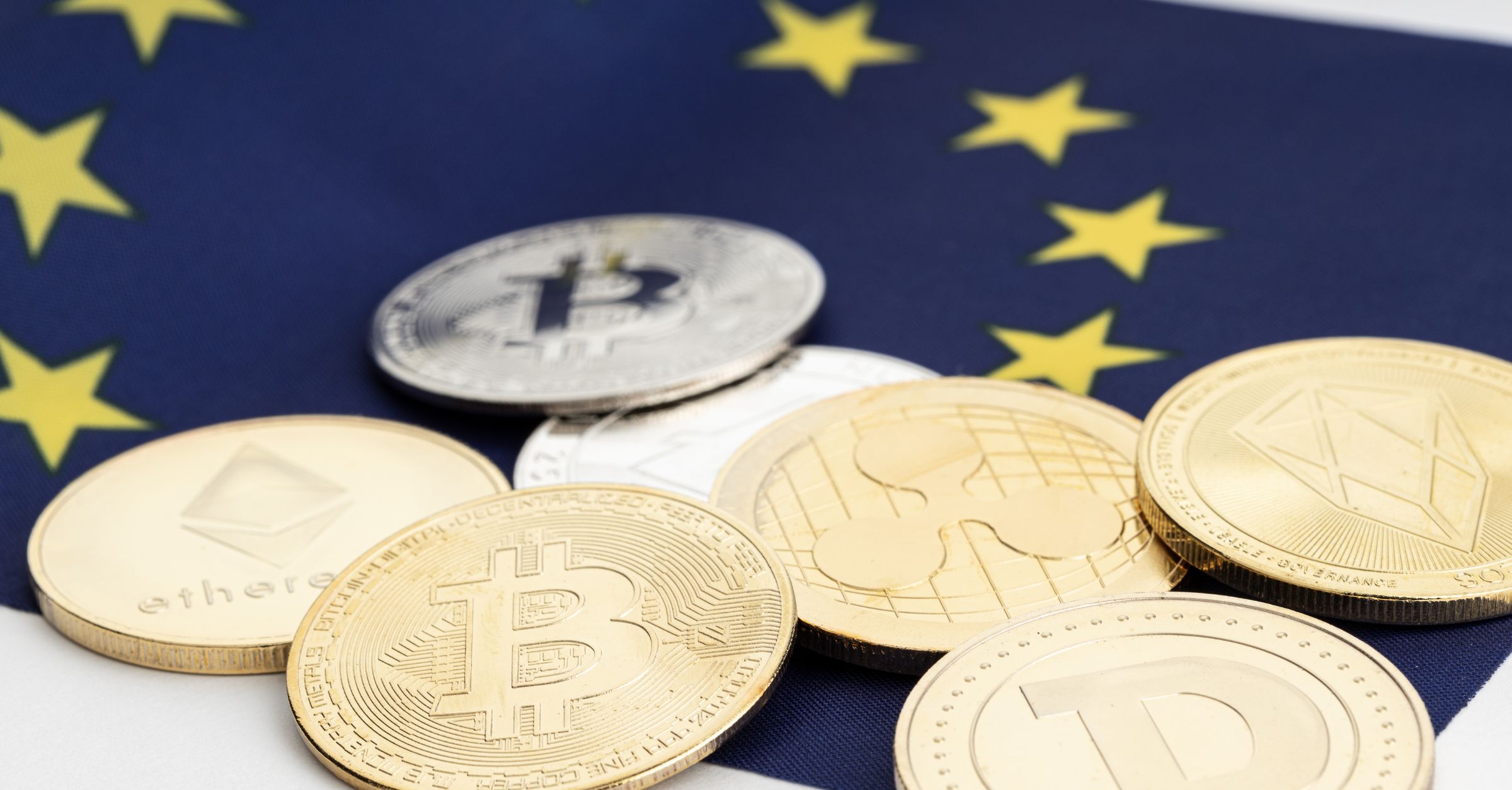

In an economic environment marked by escalating geopolitical friction, the fragmentation of international supply chains, and the structural return of expansionary monetary policies, the issue of European economic sovereignty has reclaimed center stage. Over-reliance on the US Dollar, the vulnerability of payment clearing networks, and the intense concentration of global cloud and technology providers represent deep structural weaknesses that question Europe's capacity to control its independent financial destiny.
Concurrently, the emergence of Bitcoin, a native digital, decentralized, and apolitical monetary network, presents a structural alternative to legacy financial plumbing. Long dismissed as a marginal or speculative asset, it is progressively establishing itself as a credible monetary infrastructure, actively integrated into the balance sheets of corporations, institutional asset managers, and sovereign entities.
Europe stands at a definitive strategic crossroads: integrate these novel cryptographic building blocks to reinforce its strategic autonomy, or risk deepening its reliance on non-European tech giants within tomorrow's digital economy. This article details how Bitcoin intersects with European sovereignty, outlines its structural constraints, and examines the practical implications for private savers and corporate treasuries.
A European Sovereignty Vulnerable Within the Current Financial Architecture
Structural Reliance on the Dollar and Foreign Clearers
For over half a century, the international financial architecture has structured itself heavily around the US Dollar. This global dominance extends far beyond basic trade invoicing; it encompasses the core messaging and settlement rails themselves, specifically through the SWIFT network and corresponding banking chains.
This layout forces Europe into a strategic paradox. Despite operating as a premier global economic powerhouse, the continent relies on external, foreign-controlled systems to route its strategic international capital flows. The aggressive projection of US extraterritorial jurisdiction has clearly exposed this structural vulnerability: major European corporations routinely watch their international commercial operations terminated or restricted, penalized not by domestic European mandates, but by unilateral foreign legislative decrees.
Constrained Monetary Agility Within the Eurozone
The monetary framework of the Eurozone is highly centralized, piloted exclusively by the European Central Bank. While this single architecture delivers baseline stability and multi-nation coherence, it naturally restricts the local fiscal adaptation capacity of individual member states when confronting divergent economic conditions.
In a macroeconomic era defined by sticky inflation and real yields that regularly fail to track real living costs, individual savers and corporate treasuries are watching their cash reserves face a permanent erosion of purchasing power. This erosion fuels a rational search for alternative, hard-asset allocations engineered to preserve capital across extended multi-year horizons.
The Infrastructure Deficit in Sovereign Digital Banking
Europe continues to navigate a persistent deficit in the independent development of native digital financial plumbing. According to the European Commission's 2026 Tech Sovereignty Package, the European Union currently depends on non-EU countries for more than 80% of its key digital products, services, and infrastructure.
The primary digital payment rails, transaction clearers, and data storage ecosystems are overwhelmingly dominated by non-European conglomerates. Furthermore, while Europe's domestic Web3 ecosystem is intensely active, local builders confront significant barriers, notably regarding access to large-scale growth venture capital and navigating complex compliance landscapes. Despite these headwinds, domestic adoption curves continue to accelerate.
Key Vulnerability | Geopolitical Consequence |
SWIFT & Dollar Dominance | Exposure to foreign extraterritorial sanctions and settlement roadblocks. |
Centralized Eurozone Policies | Structural exposure of corporate treasury cash to monetary dilution. |
80%+ Digital Infrastructure Dependency | Loss of direct strategic control over financial data routing and software tools. |
Bitcoin as a Alternative Monetary Infrastructure
A Decentralized, Anti-Fragile Architecture
Bitcoin differentiates itself fundamentally from legacy financial architectures through its distributed topology. It operates without a central coordinator, a corporate board, or a sovereign issuer; its security and operational integrity are maintained continuously by a global, independent network of node operators and computing centers.
Transactions are cleared and secured through a consensus mechanism known as Proof-of-Work, which mathematically guarantees the state of the shared ledger without relying on trusted intermediaries. This absolute decentralization drives the network's most critical strategic asset, which is censorship resistance. No single corporate actor, clearing house, or foreign government can unilaterally halt a valid transaction block, alter the ledger's history, or mutate the system's core parameters to favor external interests.
An Immutable, Programmatic Monetary Policy
Unlike traditional state fiat currencies, whose circulating masses are continuously adjusted by central banking boards to stabilize localized economic cycles, Bitcoin operates on an unalterable, programmatic hardcap: its maximum lifetime issuance is strictly limited to 21 million units.
This hardcapped framework, embedded into the open-source protocol, delivers absolute monetary predictability. Approximately every four years, the halving mechanism automatically reduces the supply rate of incoming bitcoins by 50%. This programmatic scarcity introduces a deflationary architecture that stands in stark, empirical contrast to the expansionary monetary cycles deployed across global central banking since 2020.
A Neutral, Continuous Global Layer
The Bitcoin network runs uninterrupted 24 hours a day, 7 days a week, 365 days a year across the entire planet. It enables counterparty-free settlement within minutes, bypassing the clearance delays, corresponding loops, and operational working hours of legacy banking hours. For European enterprises interfacing with international markets, this unlocks clear operational advantages:
- Frictionless International Settlements: Bypassing cross-border correspondent banking friction.
- Drastic Fee Optimization: Reducing intermediary clearing and remittance costs.
- Access to a Globally Neutral Ledger: Operating on a financial rail completely insulated from localized geopolitical trade disputes.
Critical Limitations and Market Maturation
A rigorous strategic assessment requires a nuanced reading of Bitcoin's systemic boundaries. The network's energy footprint remains a constant point of debate. However, modern industrial audits demonstrate that legacy models frequently overstate environmental impacts, as global Bitcoin mining increasingly anchors its operations directly into stranded renewable energy surpluses, stabilizing regional electricity grids through flexible demand response.
Furthermore, short-term price volatility remains a parameter that allocators must manage. While this volatility presents an execution barrier for short-term operating capital, the metric exhibits a steady, long-term decline as global liquidity thickens, institutional spot vehicles expand, and major corporate allocators integrate the asset.
The Role of Bitcoin in Architecting European Sovereignty
A Shield Against Extraterritorial Compliance Pressures
In an era where international financial networks are weaponized as instruments of geopolitical coercion, Bitcoin introduces a parallel, trusted settlement option. It enables sovereign economic entities to transact across a digital rail that cannot be shut down or altered by a single foreign capital.
For Europe, integrating this open monetary layer provides a powerful backup option to protect its international trading routes, guaranteeing that European firms can maintain cross-border value transfers even during periods of extreme international diplomatic or monetary fragmentation. Bitcoin does not replace existing domestic legacy institutions; it serves as a non-custodial, parallel alternative to reduce systemic exposure to foreign single-point-of-failure networks.
Optimizing the Balance Sheets of European Enterprises
The migration of Bitcoin onto corporate balance sheets has transitioned from a fringe alternative experiment into a structured asset management framework. Globally, corporations and institutional allocators collectively hold more than 1.2 million BTC, illustrating a definitive macro-allocation trend.
Within European corporate finance, deploying a controlled Bitcoin sleeve serves explicit strategic mandates:
- Treasury Preservation: Insulating stable corporate cash reserves from long-term fiat inflation.
- Asymmetric Diversification: Injecting an alternative, structurally uncorrelated asset brick to optimize the portfolio's Sharpe ratio.
- Operational Settlement Agility: Empowering international trade logistics with continuous, instant cross-border payments.
The Competitive Advantage of the European MiCA Framework
Europe possesses a major institutional asset, representing its ability to build clear, comprehensive regulatory environments. The hard cutoff date of July 1, 2026, marks the definitive end of the Markets in Crypto-Assets (MiCA) transitional window across the European Economic Area. After this date, any platform operating without full authorization is legally banned from the bloc, permanently ending internal regulatory arbitrage.
This framework replaces the historical patchwork of fragmented national guidelines with a single, audited compliance shell across all 27 EU member states. By mandating strict client asset segregation and enforcing institutional-grade transparency, MiCA provides the exact legal predictability required by large corporate treasuries and conservative family offices to deploy capital confidently.
However, European policy must remain agile: an overly bureaucratic or restrictive implementation of the remaining technical standards could stifle native software innovation, driving top-tier digital engineering talent to relocate to competing international jurisdictions.
Sovereign Asset or Missed Opportunity?
Bitcoin does not represent a magical, single cure-all for Europe’s multifaceted strategic and technological challenges. It does, however, represent a fundamental monetary and architectural innovation capable of re-engineering critical layers of the global financial system.
Its steady integration into corporate treasury balances and sophisticated estate planning packages signals a profound paradigm shift. The core question confronting European policymakers is no longer whether Bitcoin holds a legitimate place within the financial arts, but rather how aggressively Europe will choose to capture this infrastructure to secure its independent stance. Between rigid centralized control and open digital innovation, the structural choices executed today will permanently dictate Europe's geopolitical competitiveness in tomorrow's digital economy.
Key Takeaways:
- Europe currently faces an 80%+ structural reliance on non-EU entities for its core digital and payment infrastructure.
- Bitcoin provides a borderless, neutral monetary rail completely insulated from foreign extraterritorial jurisdiction and censorship pressures.
- Corporate allocation into Bitcoin functions as an asymmetric treasury shield, protecting working capital surpluses from long-term monetary dilution.
- The closing of the MiCA transitional window on July 1, 2026, establishes a highly secure, audited financial environment for European corporations.
- Treating digital scarcity as a strategic asset allows Europe to finance long-term technological sovereignty and economic autonomy.
FAQ
Can Bitcoin realistically replace the Euro?
No. Bitcoin is not engineered to replace domestic sovereign fiat currencies or uprun local central banking models. Its true value proposition is serving as a complementary, parallel alternative network optimized to function as a global digital store of value and an independent settlement infrastructure. Its role is providing a decentralized, neutral, and mathematically capped international settlement layer that runs in parallel with traditional commercial banking networks.
Should European companies systematically integrate Bitcoin into their corporate treasuries?
The choice depends entirely on the company's specific macroeconomic horizon and risk tolerance. For a growing number of firms, allocating between 1% and 5% of their stable, long-term cash surpluses to Bitcoin functions as an excellent diversification tool. This strategy actively shields capital from currency erosion over extended horizons, optimizes cross-border supplier invoice clearance free of intermediary banking delays, and introduces a dynamic asset layer completely uncorrelated with traditional stock or bond markets.
Is Bitcoin genuinely compatible with the strict nature of European regulations?
Yes. The European MiCA single rulebook was specifically engineered to pull digital assets out of a legal gray area, creating a highly regulated, transparent sandbox for their deployment. This harmonized framework across the 27 EU member nations enforces rigorous safety benchmarks, mandatory asset segregation, and clear auditing paths upon service providers, enabling institutional asset managers and corporations to deploy capital into Bitcoin under a flawless legal framework.
What are the primary operational risks an enterprise must manage before allocating?
Short-term price volatility, ongoing regulatory recalibrations, and cryptographic key custody are the main parameters that require professional mastery. For a corporate legal entity or a private saver, short-term market price fluctuations mandate a strict long-term investment horizon (typically 3 to 5 years). Concurrently, securing account access points, whether by enforcing strict internal multi-signature hardware wallet procedures or selecting a fully registered, locally compliant custodian platform, demands total operational rigor to completely neutralize capital loss risks.
Does holding Bitcoin truly reinforce European economic sovereignty?
Potentially, yes, provided it is deployed as part of a coherent, forward-looking wealth and treasury allocation model. By operating on a monetary infrastructure that is mathematically immune to the arbitrary sanctions, settlement blockades, and extraterritorial overreach of foreign powers, it empowers European economic actors to protect their international trade routes and wealth portfolios, preserving financial channels that remain completely independent of external geopolitical pressures.