
Investing in digital assets is not strictly about "buying Bitcoin." As with any wealth management strategy, the vital question is not just what to buy, but more importantly: why are you investing, on what time horizon, with what level of risk, and under what asset allocation?
Over the past several years, digital assets have steadily cemented their position within the global financial landscape. Bitcoin is now studied by corporations, institutional funds, and retail individuals alike as a strategic portfolio diversification tool. Concurrently, Ethereum and other major blockchain infrastructures attract significant attention for their technological and financial utility.
Yet, this asset class remains volatile, highly technical, and remarkably young. A coherent strategy cannot be built on emotion, speculation, or short-term market trends. It must rely on simple fundamentals: your current financial situation, risk tolerance, investment horizon, wealth goals, and your psychological capacity to handle volatility.
For any beginner saver, defining a structured approach serves first and foremost to prevent two common pitfalls: overexposure and poor emotional management. This article outlines a progressive framework to help you identify your investor profile and build a crypto strategy tailored to your objectives.
Why Digital Assets Are Increasingly Attracting Investors
A Macroeconomic Landscape That Demands Portfolio Diversification
Leaving cash dormant in a standard checking account or a traditional savings book is no longer sufficient to protect your purchasing power. Even when moderate, inflation silently eats away at the real value of fiat currency year after year.
Within this environment, diversifying your savings becomes a matter of basic financial common sense. Traditional investment vehicles are displaying structural limitations: bonds offer yields that fail to outpace inflation, while the real estate market can be saturated or difficult to liquidate quickly when cash is urgently needed. This is why a growing number of investors choose to introduce alternative assets, decoupled from the traditional banking system, into their wealth portfolios to better protect their capital.
Bitcoin: A Unique Monetary Asset in the Financial Universe
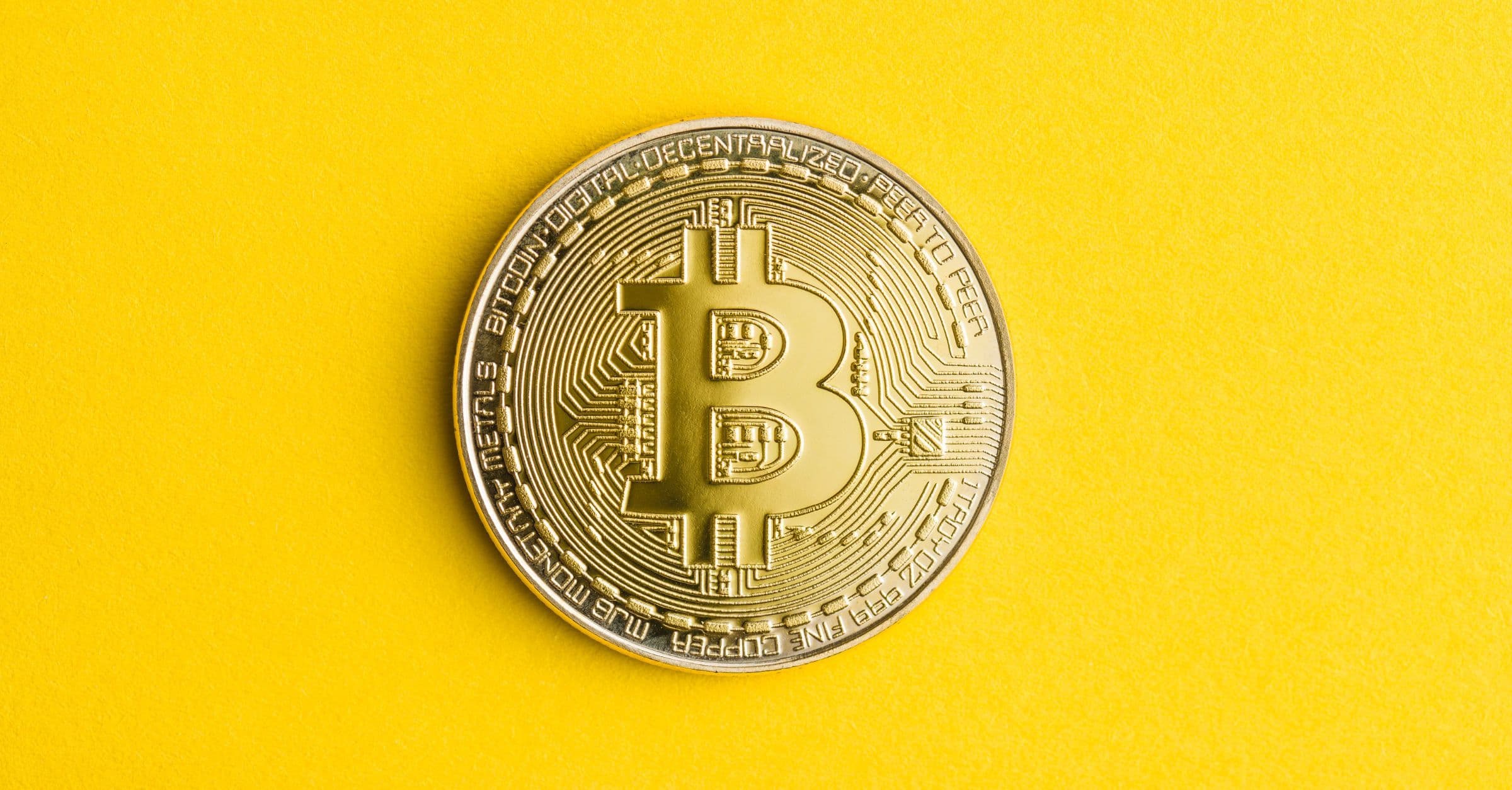
Bitcoin is an entirely unique asset class. Unlike the Euro or the US Dollar, which central banks can print in unlimited quantities, Bitcoin's supply is strictly hardcapped: there will never be more than 21 million units in existence worldwide. This scarcity is hardcoded into its underlying computer protocol, and no entity can alter it. This represents a major structural divergence from traditional corporate equities.
Furthermore, Bitcoin does not depend on any company, executive team, or corporate promise of return. Its value relies exclusively on the cryptographic security of its global computer network and on an absolute certainty: no intermediary can block or confiscate your transactions. This profound independence and programmatic scarcity are precisely what lead many savers to view it as digital gold, a robust vehicle for long-term capital preservation.
Ethereum and Alternative Digital Assets: Innovation and Real-World Utility
While Bitcoin establishes itself as a pure store of value, Ethereum and other major blockchain protocols operate under an entirely different logic. They do not aim to act as alternative currencies, but rather as decentralized software infrastructures. Powered by smart contracts (self-executing digital agreements that run automatically when predefined conditions are met), the Ethereum network allows developers to build programmable financial applications and services completely free of centralized intermediaries.
It is precisely upon this technological foundation that stablecoins are built, digital tokens pegged to traditional fiat currencies like the Euro or the US Dollar to stabilize their market price. This infrastructure also drives tokenization, a mechanism that allows real-world assets, such as real estate shares or financial securities, to be fractionally owned and seamlessly traded on-chain. For an investor, gaining exposure to this specific ecosystem means investing in a high-growth technological infrastructure; however, its risk profile and absolute dependence on software innovation are significantly higher than Bitcoin's.
Identifying Your Investor Profile Before Allocating Capital
Defining Your Investment Horizon
Time is the single most critical parameter when managing a volatile asset class.
- Short-Term Horizon (Under 1 Year): Exposing capital over a timeframe shorter than a year completely removes the ability to smooth out costs over time, leaving your wealth highly sensitive to raw short-term market volatility.
- Medium-Term Horizon (1 to 4 Years): Allows the portfolio to absorb a portion of standard market price corrections, though it remains tightly subjected to natural crypto market cycles.
- Long-Term Horizon (Beyond 4 Years): Effectively blunts historical volatility. Historical market data demonstrates that an extended holding period drastically increases the mathematical probability of achieving positive portfolio performance.
Assessing Your True Risk Tolerance
Risk tolerance is fundamentally a psychological milestone. Are you genuinely prepared, on an emotional level, to see your account balance temporarily drop by 30% or 50% without panicking and liquidating your position at the absolute bottom?
A vital distinction must be made between real risk (the permanent, irreversible loss of your capital) and daily volatility (the constant upward and downward price fluctuations of the open market). To navigate this volatility with total peace of mind, your main lever is position sizing: your total crypto allocation must never jeopardize your global financial stability or disrupt your sleep.
The Three Core Crypto Investor Profiles
Investor Profile | Recommended Allocation | Core Asset Focus | Strategic Intent |
Conservative (Prudent) | 1% to 3% of total wealth | Bitcoin exclusively | Long-term programmatic capital preservation |
Balanced (Équilibré) | 5% to 10% of total wealth | Bitcoin and Ethereum core | Regular risk-adjusted portfolio optimization |
Dynamic (Dynamique) | Above 10% of total assets | Core assets + secondary digital assets | Aggressive capital growth capturing infrastructure upside |
Building a Consistent and Progressive Crypto Strategy
Establishing a Wealth-Adjusted Allocation
Digital assets must never cannibalize your vital emergency fund, real estate commitments, or traditional core investments. They should function strictly as an uncorrelated, complementary diversification sleeve within your global wealth. Refusing to overexpose your personal savings is the golden rule for maintaining absolute clarity during violent market movements. When starting out, a marginal allocation is fully sufficient to capture the asymmetric growth potential of this asset class without putting your financial baseline at risk.
Executing via an Automated DCA Strategy
Dollar-Cost Averaging (DCA), or automated recurring purchasing, consists of systematically buying a fixed fiat amount of digital assets at regular intervals, weekly or monthly, completely ignoring short-term market conditions. This recurring purchase strategy mechanically reduces the impact of volatility by smoothing out your average cost basis over time. Furthermore, it enforces a strict emotional discipline: you no longer waste time or energy trying to guess whether the market is at a local bottom or top, an exercise that routinely penalizes retail investors.
Securing Your Assets and Choosing a Regulated Partner
A flawless allocation strategy means nothing without bulletproof operational security. Protecting your cryptographic access keys and selecting your exchange platform must be approached with the utmost rigor.
To achieve this, prioritizing intermediaries that comply fully with French national regulations (PSAN status delivered by the AMF) and European standards (MiCA regulations) is absolutely mandatory. Relying on local, compliant, and sovereign partners efficiently shields the investor against operational mismanagement and the structural counterparty risks associated with unregulated offshore entities.
Common Pitfalls for Beginner Investors
A lack of market experience frequently leads to the same structural mistakes, which can be easily avoided:
- Investing impulsively driven by pure emotion due to a fear of missing out during an intense upward market run, known as the FOMO phenomenon.
- Blindly chasing short-term speculation trends dictated by unvetted social media sources.
- Neglecting baseline digital security, such as failing to activate Two-Factor Authentication (2FA) or poorly backing up recovery seed phrases.
Adapting Your Strategy to Personal or Professional Contexts
For Individual Savers
The retail individual saver typically operates under a long-term wealth management logic. Their primary goal is to grow capital, prepare for retirement, or structure an estate transmission. Within this framework, an extended time horizon allows Bitcoin and foundational digital assets to act as intergenerational diversification tools, while cleanly anticipating local personal tax frameworks, such as the flat-tax regime in France.
For Business Executives
The corporate executive managing an SME or a holding company navigates a different set of constraints. Here, integrating digital assets serves to diversify stable corporate cash surpluses. This corporate allocation requires a long-term strategic vision, ironclad risk management (notably to fully preserve the immediate operational liquidity required by the firm's day-to-day business), and flawless accounting compliance executed in tight collaboration with the company’s certified public accountant.
Why Financial Education Remains Paramount
The timeless adage of wealth management applies perfectly to this sector: "Never invest in something you do not thoroughly understand." Taking the necessary time to learn the underlying mechanics of Bitcoin, and understanding exactly why its mathematical scarcity sets it apart from any other asset class, is your best insurance policy. This foundational understanding is what will prevent you from panicking or making impulsive trading decisions when market prices fluctuate. By building your knowledge step by step, you transform uncertainty into a robust conviction, which remains the only viable method to save serenely over the long term.
Key Takeaways:
- A high-performing strategy is almost always a simple one.
- Execution consistency and regularity outweigh chasing perfect market entry timing.
- Risk management and position sizing must sit at the absolute center of your allocation.
FAQ
Is holding a 5% allocation to Bitcoin within my total wealth already too risky?
Risk cannot be assessed in isolation; it must be measured against your aggregate asset base. If the remaining 95% of your wealth is securely allocated across traditional, diversified vehicles such as real estate, index funds, or bonds, a 5% allocation to Bitcoin is completely manageable. It introduces a highly favorable financial asymmetry: if the asset grows, it drives global portfolio performance upward; if it undergoes a severe correction, your maximum potential loss is strictly capped at 5% of your total capital, fully preserving your core financial security.
As a business executive, can I hold Bitcoin on my SME’s balance sheet?
Yes, it is entirely possible for a corporate entity to legally acquire and hold digital assets. From an accounting perspective, they are typically recorded as intangible assets or marketable securities (Valeurs Mobilières de Placement - VMP) depending on the underlying investment intent. Corporate income tax (Impôt sur les Sociétés - IS) is triggered only upon disposal when the asset is sold back into Euros. It is absolutely mandatory to structure and validate this setup hand in hand with your corporate accountant.
How should I react if the market undergoes a sudden drop of more than 30%?
The optimal response is behavioral: you must immediately return to the core fundamentals of your initial plan. If your investment horizon is structurally long-term and you utilize a disciplined smoothing method (DCA), an open-market drop is merely an unrealized (paper) depreciation. Historically, these drawdowns represent prime opportunities to accumulate fractions of digital assets at a lower cost, provided you maintain emotional discipline and refuse to give in to panic.
Why should a conservative investor prioritize Bitcoin over Ethereum?
Bitcoin possesses a significantly longer track record, an entirely decentralized governance structure, and an unalterable monetary policy hardcoded into its protocol (the absolute 21 million hardcap). It functions strictly as a pure store of value (digital gold). Conversely, Ethereum is a technology platform undergoing continuous, active software evolution, which introduces a higher layer of technical execution risk inherent to cutting-edge infrastructure projects.