
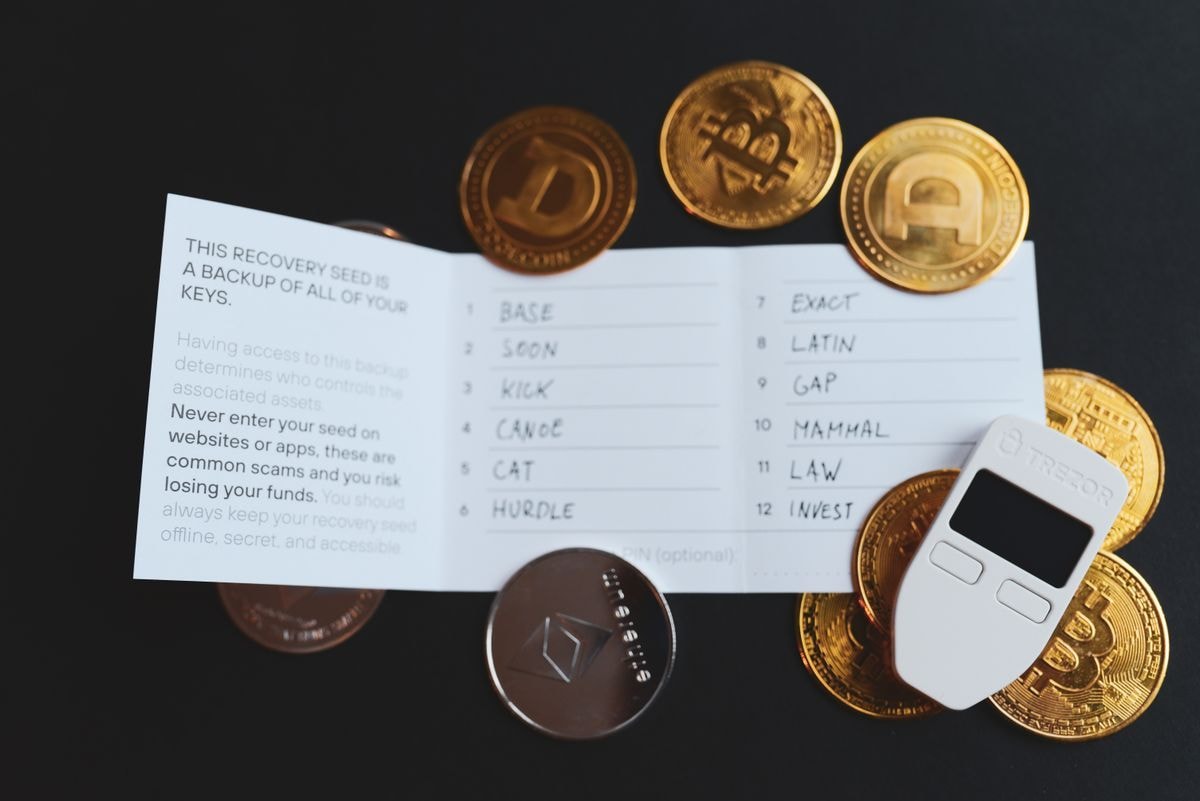
The crypto ecosystem undergoes attacks on a regular basis, which weaken the infrastructures of various cryptocurrencies and cause losses among users. As an adaptation to these hacking acts, growing importance is granted to wallets that do not present vulnerabilities that hackers can exploit. The paper wallet is a type of wallet meeting this requirement. Easily created by the user themselves, it presents the key asset of being completely free.
The Paper Wallet, for Protection Against Internet Vulnerabilities
The needs of backing up one's cryptocurrencies imply resorting to wallets. Conventionally, the wallets used are those known as hot wallets; these online wallets are found on exchanges and web applications. However, increasingly, cold wallets also enjoy a certain acclaim.
Just like other cold wallets, the paper wallet stands out by its total detachment from the Internet, ensuring it is not exposed to attacks occurring online. It consists of a piece of paper on which the private key and the public key of a crypto wallet are printed. These keys come in the form of character series and QR codes. Depending on the tool used to generate the paper wallet, it can also contain a barcode to scan.
How to Create a Paper Wallet?
The principle of the paper wallet is to avoid as much as possible any contact between it and electronic systems. Consequently, if you wish to switch to a Bitcoin paper wallet or an Ethereum paper wallet to store your tokens or your coins, it is recommended to generate a new wallet.
To achieve this, you have the possibility to use dedicated applications or software. On Paymium for example, we offer you the possibility to create your paper wallet in a few clicks. You just need to create your account, then log in and access the wallet management tools where a menu allows you to access the paper wallet creation features.
The creation process generally consists of entering a series of random numbers, or performing mouse movements. Whichever mode is proposed, the objective for the paper wallet generator is to obtain a random number between 1 and 2^256. This number is then converted into a unique private key, which corresponds to the identity of your wallet.
From this private key, a public key is obtained. To provide you with your offline wallet, the tool generates a series of words called a seed phrase, which serves as the private key for accessing your wallet. You then simply need to print the seed phrase, fold the sheet of paper used as a backup, and store it in a secure location. Your crypto paper wallet is thus ready. On most tools, your paper crypto wallet contains both the private key and the public key, for the various purposes for which you might want to use your wallet.
Paper Wallet: How to Use It?
Before resolving the question of using a paper wallet, it is appropriate to first evoke that of its security.
How to Store a Paper Wallet?
You must keep in mind that this wallet represents the only backup medium you have to access your cryptos once these are saved on it. That is why it is advised to keep your wallet in a safe place, such as a fireproof safe. Furthermore, the storage location of your paper wallet must be protected from any risk of moisture. In case of loss of your paper wallet or damage by water, your wallet keys become inaccessible, and you would then lose the cryptos stored on it.
How to Transfer Funds to a Paper Wallet?
Like any cryptocurrency wallet, the paper wallet is intended to receive cryptocurrency tokens or coins. Cryptos such as Solana, Ethereum, Cardano, or Shiba Inu can all be stored in a paper wallet. After using a Bitcoin wallet generator, a Solana paper wallet generator, or any other tool, the printed medium contains the QR code or the public key that will allow you to receive cryptos.
To send cryptos to your paper wallet, go to a marketplace, a website, or the app of the exchange. Configure your transaction parameters and scan the public QR code of your paper wallet when indicating the destination of the cryptos to transfer.
In its status as a cold wallet, a paper wallet certainly represents a reliable solution for storing your cryptos. Nevertheless, its total disconnection from electronic systems sometimes makes executing transactions constraining. Still on the side of disadvantages, one can mention the impractical nature of this setup, as several steps are necessary to access your wallet.
FAQ
What fundamentally differentiates a paper wallet from a hardware wallet?
Although both belong to the cold storage category (offline storage), the hardware wallet integrates a secure electronic chip that signs transactions locally without ever exposing the private key. The paper wallet, on the other hand, is a purely physical medium. While it offers total isolation from cyberattacks during storage, its vulnerability lies in its handling: exposure to physical degradation and the requirement to import the key onto a connected device to spend the funds.
What are the major physical risks associated with using a paper wallet?
Being composed only of ink and paper, this medium is subject to real-world hazards. The main risks include destruction by fire, illegibility of QR codes caused by moisture or flooding, and thermal or temporal fading of the ink. To mitigate these weaknesses, demanding investors often prefer to engrave their recovery phrase (seed phrase) on stainless steel plates, which are resistant to fire and corrosion.
How do you spend or transfer funds stored on a paper wallet?
To use the cryptocurrencies present on a paper wallet, you must proceed with a sweeping or import operation. This consists of scanning the printed private key using a connected wallet application (hot wallet). The application will then import the key or transfer the entirety of the funds to a new secure address. From that exact instant, the offline protocol is broken and the original paper wallet must never be reused.
Is it secure to generate a paper wallet from a computer connected to the Internet?
No, this is one of the most critical errors. If the computer system or the printer used are connected to the network or compromised by malicious software, the private key can be intercepted at the precise moment of its creation. To guarantee rigorous security, a paper wallet must be generated using open-source software downloaded beforehand, executed on a computer totally isolated from the Internet (an air-gapped environment), and printed via a local wired connection, with no shared storage memory.