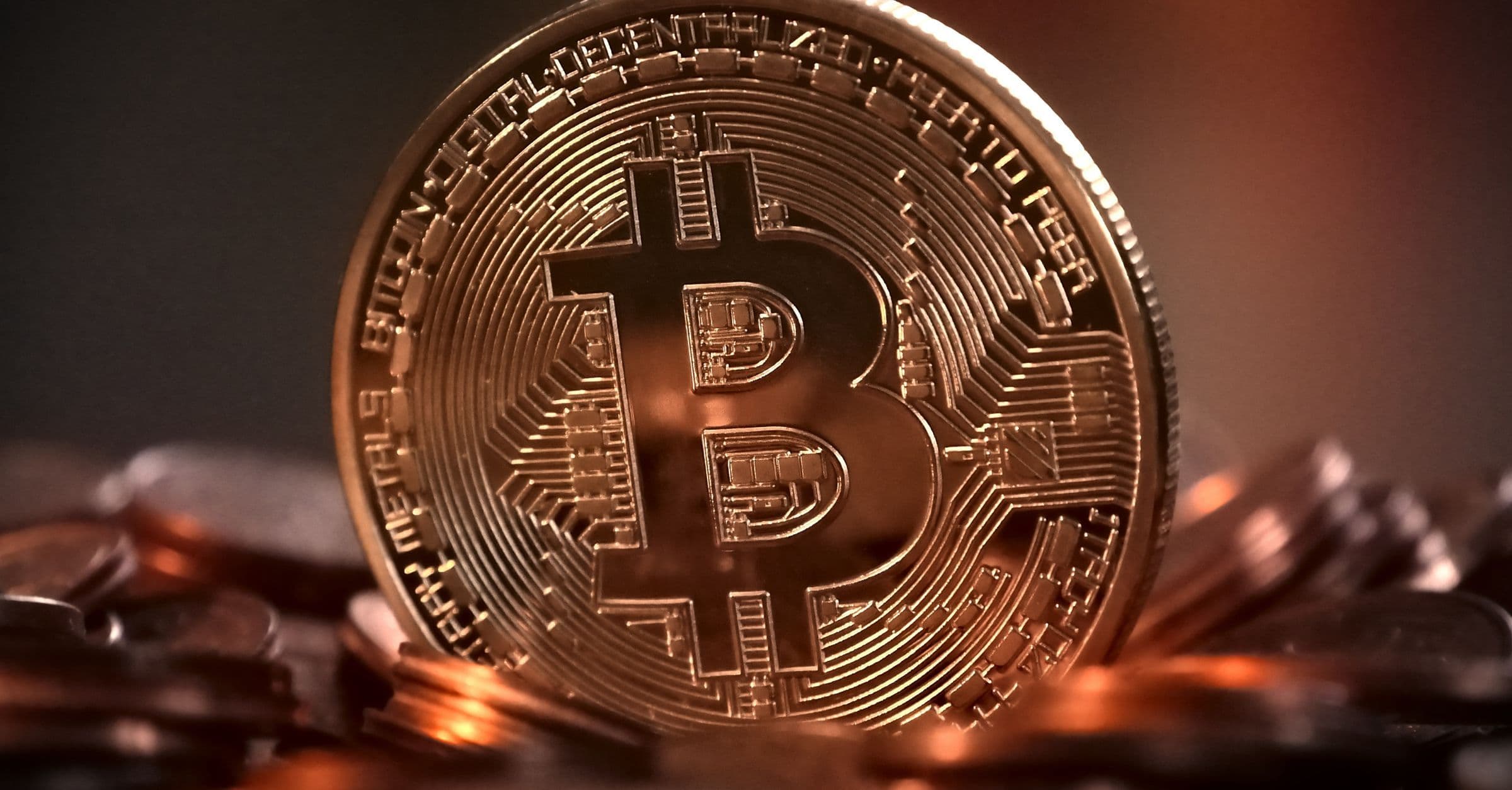

For millennia, gold has held a central place in wealth preservation. A universal store of value, a tangible asset recognized by all civilizations, it has weathered monetary crises, wars, and economic shifts without ever losing its status.
Since 2009, a new form of asset has emerged: Bitcoin. Born out of a loss of trust in the traditional financial system, it offers a radical alternative, a decentralized digital currency with a strictly limited supply. Inevitably, a comparison quickly arose: could Bitcoin be a form of "digital gold"?
This analogy is appealing, but it oversimplifies a complex reality. While these two assets share fundamental characteristics, notably scarcity and independence from central banks, they differ profoundly in nature, behavior, and economic role.
Understanding these differences is essential, not to pit these assets against each other, but to grasp what they truly bring to a modern wealth management strategy.
Gold: A Store of Value Forged by History
Gold is not simply a financial asset; it is a structural pillar of global monetary history. Used as currency or a reserve of wealth for over 5,000 years, it long served as the foundation of monetary systems, notably through the gold standard. Even today, central banks hold massive reserves of it, proving its persistent legitimacy.
This status relies on several fundamental properties:
- Scarcity: Gold is difficult to extract, costly to produce, and available in limited quantities. Each year, the increase in the global stock is low, around 1.5% to 2%, making it naturally resistant to monetary inflation.
- Durability: Unlike other industrial resources, gold does not degrade. A centuries-old coin retains the exact same chemical properties today.
- Universal Acceptance: Gold is recognized everywhere, independent of borders, political systems, or fiat currencies.
However, gold is not without limitations. It is physical, which introduces heavy constraints regarding storage, transport, and security. It is not easily divisible or deployable on a digital scale. Above all, its price depends on modern financial dynamics like interest rates and institutional macro demand, which complicates its role as a perfect hedge against inflation.
Bitcoin: A Programmed Scarcity
Bitcoin introduces a major conceptual breakthrough. Where gold relies on physical scarcity, Bitcoin relies on mathematical scarcity.
Its supply is capped at 21 million units, written directly into its core protocol. This limit cannot be modified without a global consensus of the network, making it extremely robust. Unlike traditional currencies, no authority can decide to create more.
Bitcoin’s money creation follows a predictable pace via a mechanism called the halving, which cuts new issuance in half approximately every four years. This dynamic makes Bitcoin not only scarce but also completely predictable.
On a technical level, Bitcoin relies on a decentralized network secured by Proof-of-Work. This mechanism, which requires energy consumption, plays a role similar to the extraction cost of gold: it anchors digital value in a real-world physical effort.
However, Bitcoin is not a tangible asset, it is purely digital. Its ownership relies on cryptographic keys, and its existence depends on technological infrastructure like the internet and electricity. This fundamental difference conditions both its advantages, such as portability, divisibility, and global accessibility, and its limitations.
Real Similarities, Often Overinterpreted
The comparison between Bitcoin and gold rests on very real common ground:
- Scarcity: In a world where central banks can expand the money supply rapidly, both assets offer an alternative. They cannot be printed at will.
- Independence: It is possible to hold physical gold yourself, just as it is possible to hold Bitcoin without an intermediary via a private key. In both cases, this allows an investor to partially decouple from the banking system.
- Diversification: Historically, gold has been used to stabilize portfolios. Bitcoin, though much younger, also exhibits a low correlation with certain traditional assets over the long term.
But these similarities must not mask an essential reality: these two assets do not play the same financial role.
Two Radically Different Behaviors
The most visible difference between Bitcoin and gold lies in their market behavior.
- Gold is a relatively stable asset. Its volatility is moderate, and it tends to gain value during periods of economic stress. It is a defensive asset, sought after when markets become highly uncertain.
- Bitcoin, conversely, is a highly volatile asset. Its price can experience significant variations in a very short period of time. This volatility is explained by its youth, its liquidity still under construction, and its sensitivity to speculative capital flows.
Several academic studies show that Bitcoin does not behave, at this stage, like a safe haven comparable to gold. It can sometimes move in correlation with risk-on assets, particularly technology stocks.
In other words, gold protects against crises while Bitcoin amplifies market cycles. This distinction is fundamental for the investor.
A Decisive Difference in Maturity
Gold is a mature asset. It is fully integrated into the global financial system, regulated, recognized, and widely understood. Bitcoin, on the other hand, is still in its adoption phase.
Its regulatory framework is structuring progressively, notably in Europe with the MiCA regulations. Institutional adoption is accelerating but remains limited compared to gold.
While businesses are beginning to integrate it into their treasury strategies, this dynamic is relatively recent. Today, institutional players already hold over 1.2 million BTC, a sign of a genuine paradigm shift, even if we are still far from a universal standard. This difference in maturity largely explains the gap in volatility and perception between the two assets.
Is There Really a Choice to Be Made?
The question is poorly framed. Opposing Bitcoin and gold amounts to comparing two different tools designed to meet distinct needs.
Gold is an asset of preservation. It protects against uncertainty, stabilizes a portfolio, and sails through economic cycles. Bitcoin is an asset of opportunity. It offers an asymmetrical growth potential, but with a higher level of risk.
Within a wealth management framework, these two assets can be highly complementary. Gold can constitute a defensive baseline, while Bitcoin can play the role of a dynamic diversifier. The goal is not to choose one over the other, but to understand their respective functions.
Key Takeaways :
- Gold is a historical, stable, and universally recognized store of value.
- Bitcoin introduces a programmable, digital scarcity.
- Both assets share key properties but differ profoundly in market behavior.
- Gold acts as a defensive asset, while Bitcoin is a volatile, emerging asset.
- Combining both can optimize modern portfolio diversification.
Conclusion
Bitcoin and gold are not direct competitors; they reflect two different visions of value. One is anchored in history, physical matter, and stability. The other is driven by technology, digital scarcity, and innovation.
In a macroeconomic landscape marked by rising global debt, geopolitical tensions, and monetary transformations, it is highly probable that both approaches will continue to coexist. The informed investor does not look to choose a side, they look to understand, and above all, to build a strategy tailored to their horizon, risk tolerance, and vision of the world.
FAQ
Will Bitcoin replace gold?
There is no indication of this today, as both assets meet distinct financial needs. Gold remains a physical, tangible store of value universally recognized by institutions and central banks for millennia. Bitcoin, on the other hand, is establishing itself as an alternative monetary infrastructure that brings mathematical scarcity into the digital realm. Rather than a replacement, the current trend shows a lasting coexistence where gold embodies material stability and Bitcoin provides frictionless, digital peer-to-peer transfer.
Does Bitcoin perform better than gold?
Historically, Bitcoin has delivered asymmetrical growth returns far superior to gold over multi-year cycles, but this yield potential comes with much higher volatility. While gold's price moves in a quiet, predictable manner to preserve capital, Bitcoin goes through intense correction and expansion phases linked to its youth and ongoing monetization. Bitcoin's outperformance requires a long time horizon and a high risk tolerance.
Is gold outdated?
No, gold remains a central pillar of wealth strategies and global reserve management. Its physical immutability, its total decoupling from technological infrastructure like electricity and the internet, and its defensive behavior during systemic crises give it a stabilizing role that no digital asset can identically reproduce. It remains the reference asset for purely preserving purchasing power across centuries.
Can you combine both?
Yes, and it is a highly relevant approach in modern portfolio diversification. Combining gold and Bitcoin allows an investor to balance tangible and digital assets outside the traditional banking system. Gold provides the defensive foundation needed to protect capital against market downturns, while Bitcoin offers a dynamic diversification sleeve capable of capturing technological innovation and outperforming inflation.