First published: 08/29/2023
Last updated: 08/08/2025
An altcoin refers to any cryptocurrency other than Bitcoin. Among the most well-known altcoins are Ethereum, Polkadot, and BNB. Altcoins in crypto encompass several types: meme coins, stablecoins, etc.
Altcoins: What Are They?
The rapid development of cryptocurrencies has led to the appearance of a multitude of new words. These neologisms sometimes come from invented expressions that have gone viral, or from existing terms to which a new meaning is assigned. They are also sometimes formed by combining multiple words or phrases. This latter etymology applies to the term "altcoin," which became popularized starting in 2015.
What is an altcoin? The expression altcoin comes from the combination and contraction of the English terms "alternative" and "coin," and literally means "alternative coin." One can also speak of an alternative token or alternative currency. The expression altcoin therefore refers to any cryptocurrency distinct from Bitcoin.
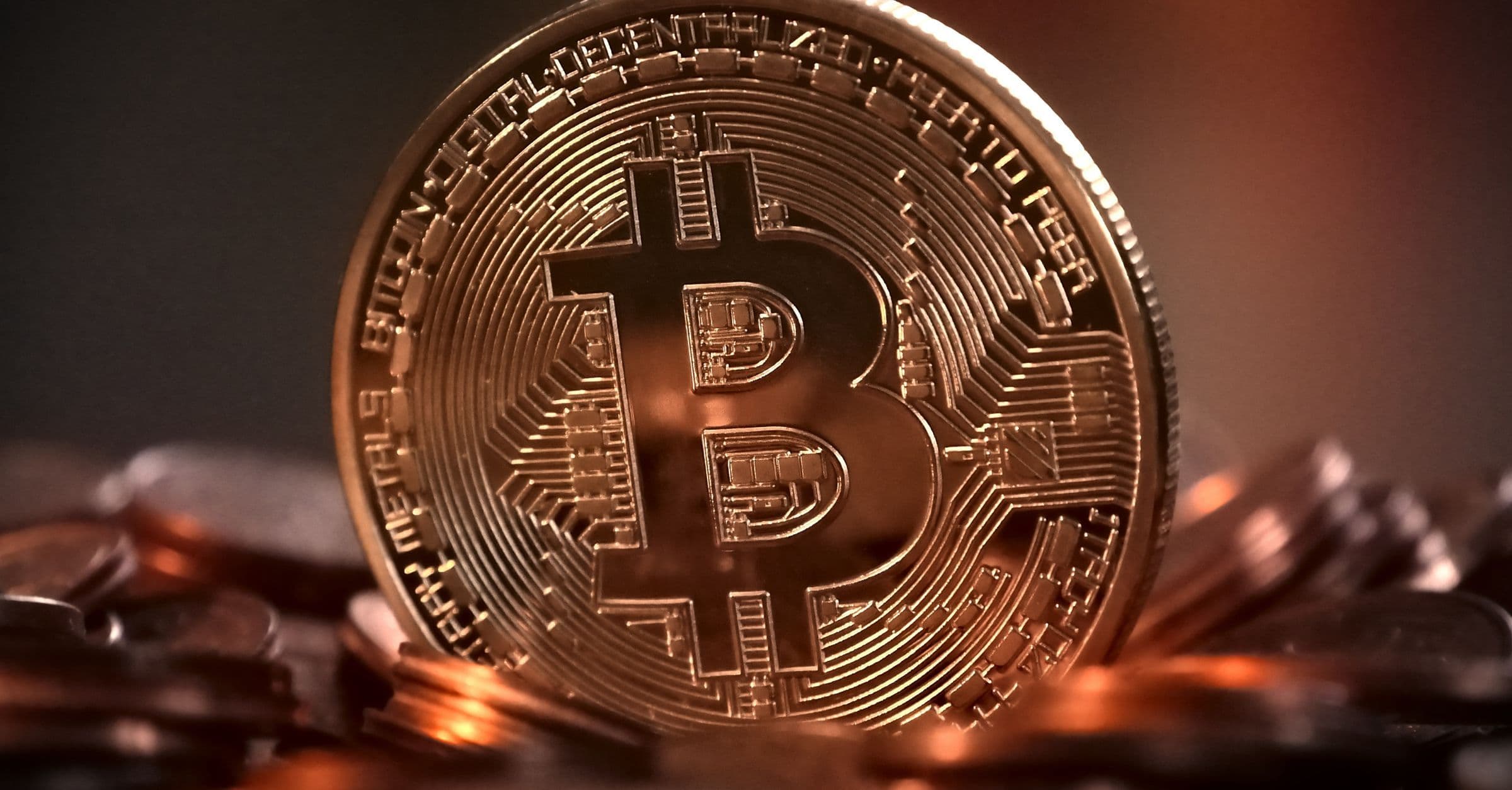
When the queen of cryptos or mother crypto was born in 2009 under the impetus of the founder / founding team Satoshi Nakamoto, it was a world first. Bitcoin and its associated technologies, notably the Blockchain, introduced the first entirely decentralized monetary system, operating via interconnected devices and a virtual space. This precursor image remains stuck to BTC's skin. Any cryptocurrency created thereafter is viewed merely as an alternative solution, regardless of its level of credibility and trust. This situation of cryptocurrencies other than Bitcoin is perfectly illustrated by the position of the crypto considered to be the major altcoin, Ethereum.
History of the term "altcoin"
Shortly after the launch of Bitcoin, many other new decentralized virtual currency projects were initiated. Between 2010 and 2013, these notably included Namecoin (also designed by the creator of Bitcoin), Peercoin, Novacoin, and Devcoin. The cryptos of this first wave unfortunately struggled to position themselves against Bitcoin. Unsurprisingly, most of them ended up evaporating after a few months or years.
Only Litecoin, thanks to strict security protocols and a high capacity for adaptation, managed to preserve its status over time, though without truly bringing a disruptive innovation. It was not until 2015, with the birth of Ethereum, that we witnessed the development of a true parallel solution, proposing a monetary system different from that of Bitcoin. The designation "altcoin" then found a true reason to exist and progressively spread in the wake of Ethereum, before ultimately being assigned to any cryptocurrency other than BTC.
Ethereum, the Altcoin par Excellence
Ethereum is considered by many as the leader of altcoins, given the strong position it maintains both relative to Bitcoin and relative to other alternative cryptos. This position comes in part from the timing of its arrival on the market, but also and above all from the quality and utility of the technologies it proposes.
History of Ethereum
As a blockchain, Ethereum provides a decentralized exchange protocol through which users can generate smart contracts. The arrival of ETH on the market took place in July 2015, at a period when the crypto sector was still in its infancy, caught between investor hesitation and the reluctance (or denial) of the institutions in charge of market regulation. With the launch of Ethereum, under the initiative of its creator Vitalik Buterin, the world realized much more firmly to what extent the Blockchain can serve not only in the economy, but also in agriculture, commerce, or healthcare. Thanks to the functionalities of the blockchain created by Vitalik B., crypto projects can develop more easily by using the said blockchain as a foundation.
The cryptocurrency Ethereum (ETH) moves the market
Ethereum decentralized the creation of smart contracts at high speed and brought cryptocurrencies into a new era of popularity. Rapidly, its native crypto, Ether, used for transactions or for financing operations on the Ethereum blockchain, also saw its adoption level climb.
Two years later, notably with a first major peak for BTC at over 17,000 US dollars (December 2017), the combined effects of this popularity of ETH and the 2016 Bitcoin halving led to the exponential bull cycle that the crypto market still experiences today. Even though Bitcoin has nevertheless never lost its place as precursor and leader, it continues to be closely followed by Ether. Every time Bitcoin grows, it pulls Ethereum up with it, before other cryptos follow.
In terms of capitalization, Bitcoin currently stands (as of August 2025) at around 2.3 trillion US dollars. Behind it, Ethereum also puts up a good showing with nearly 477 billion USD, far ahead of most other cryptos.
Litecoin (LTC), One of the First Major Altcoins
Its contribution was certainly not as decisive as that of Ethereum. Nevertheless, in addition to being older than Ethereum, Litecoin has the merit of having actively contributed to the expansion of cryptocurrency technologies. Launched in 2011, it constitutes one of the very first crypto assets to have seen the light of day after Bitcoin.
Even though the creators of Litecoin (LTC) essentially took over the operational principles of BTC, their project knew very early on how to stand out through an algorithm readjusted to adapt to the growth in the number of users. Updating the block size to optimize the hash rate and transaction speed was notably among the updates that the Litecoin team quickly deployed. In 2025, 14 years after its creation, Litecoin (LTC) is one of the rare altcoins from the first wave of cryptos to still exist. And with a capitalization of 9.36 billion US dollars, it remains solidly present on the market.
What Are the Other Altcoins: Top 5 of the Most Well-Known After Ethereum
When considering altcoins as a whole, there are very many of them! As you must have understood from the beginning of this guide, any crypto outside of Bitcoin is an altcoin. To date (August 2025), the Coinmarketcap website counts, for instance, 19.19 million alternative cryptocurrencies. We are obviously not going to list them all, as they have not all acquired an acceptable level of credibility. This is evidenced by the fact that on Paymium notably, we only offer you the exchange of cryptos with a certain potential and that have already presented proof of reliability.
Every day, dozens of crypto projects are launched, and dozens of others die. Nevertheless, outside of Ethereum, several other cryptos present themselves as serious alternatives to Bitcoin. Here are 5 of them ranked according to the size of their capitalization.
Binance Coin (BNB)
Binance Coin (BNB) is an altcoin that saw the light of day in 2017 as the native cryptocurrency of the Binance Smart Chain blockchain. The marketing strategy put in place by the Binance team, headed by Changpeng Zhao, was particularly effective. This is evidenced by the 100 million US dollars raised in just one week as part of the ICO (initial coin offering) conducted before the official launch. This same strategy allowed the BNB crypto to position itself among the major altcoins (market cap at around 110 billion US dollars).
Ripple (XRP)
The altcoin Ripple (XRP) also enjoys its seniority and the innovative nature of its technologies. It is affiliated with the XRP Ledger network, an open-source network that allows for the initiation of decentralized and free transactions. Less popular than Ethereum or Bitcoin, XRP relies on a few assets that earn it a choice place on the market (around 197 billion USD in capitalization). The Ripple (XRP) network is characterized, among other things, by very low transaction costs, a remarkable transaction speed, and significant scalability.
Cardano (ADA)
The cryptocurrency Cardano (ADA) was unveiled in 2015, then officially launched in 2017 after the organization of an ICO that allowed for the raising of 62 million US dollars. The promises of decentralized management and total openness put forward by the creators of Cardano contributed to the success of this fundraising via a token offering. The ADA crypto thus distinguishes itself by decision-making verified in multiple steps and validated by all holders. Furthermore, Cardano features its own blockchain, which operates via proof-of-stake. Rigor in the management of the project favored the stability and growth of the Cardano network, which today displays a capitalization of around 28 billion US dollars.
Solana (SOL)
The developers of Solana (SOL) officially labeled their crypto an "Ethereum killer." They notably surfed on this nickname to rapidly grow the community of Solana holders and investors. And with a market cap at around 95.5 billion USD, whereas the SOL crypto was only presented to the general public in 2020, one can say that the creators' objectives have been met. In just 1 year of existence, it had seen its price evolve by around 4,200%. Beyond its nickname of Ethereum killer, Solana also owes its success to the innovative proof-of-history approach. This allows it to offer, much like Ethereum, smart contract creation technologies while offering significantly reduced processing times and vastly lower costs.
Polkadot (DOT)
Polkadot presents itself as an open-source protocol facilitating interoperability between blockchains. On this basis, the Polkadot network, powered by the eponymous cryptocurrency Polkadot (DOT), offers users total control over the data and assets they wish to transfer. It furthermore allows for the easy creation of services and applications based on the Blockchain. Polkadot is thus located at the heart of an almost ideally decentralized crypto ecosystem. This principle greatly contributed to making the native crypto of the network popular. From the height of its 6.3 billion market cap, it logically positions itself as one of the main altcoins after Ethereum.
Altcoins, Shitcoins, Meme Coins: What Are the Differences?
If you are used to browsing sites and platforms whose activity is dedicated to cryptocurrencies, you must have already come across these expressions multiple times. To begin with, remember that shitcoins and meme coins are automatically altcoins.
Next, cryptos that are dubious, backed by an uncredible project, and considered to have too low a potential are called shitcoins. In most cases, shitcoins end up disappearing after a few weeks or months.
As for meme coins, these are cryptocurrencies launched as simple jokes, or as representations of popular subjects (memes) on the Internet. Most altcoins in this category experience an accelerated growth cycle from their launch, before decreasing just as abruptly. Some meme coins or meme tokens end up developing in a lasting way, largely thanks to a large community participating in the creation of a strong capitalization. One of the most well-known examples is Dogecoin. Others gradually become shitcoins and disappear over time.
What Is the Difference Between an Altcoin and a Stablecoin?
The notion of a stablecoin saw the light of day well after the creation of Bitcoin, in response to the doubt of public institutions regarding the credibility of cryptocurrencies. Stablecoins are therefore also automatically altcoins. They distinguish themselves by the fact that their price varies only very slightly, because it is pegged to that of a fiat currency, generally the US dollar / USD or the euro. The most well-known stablecoins or stable altcoins to date are Tether (USDT), Binance USD (BUSD), Dai (DAI), or USD Coin (USDC), all backed by the US dollar.
Should You Invest in Altcoins?
Investing in altcoins can be interesting if you make sure to thoroughly analyze the project you are targeting. These cryptocurrencies can be extremely different from one another. As with all cryptocurrencies, you must exercise caution when deciding to invest in an altcoin. Read through its whitepaper, find out about the founders, read the news, and document yourself on the project before taking action.
FAQ
What is an altcoin?
The expression altcoin comes from the contraction of the English terms "alternative" and "coin." It refers to any cryptocurrency distinct from Bitcoin. As Bitcoin retains its status as pioneer and market leader, all other currencies created after it (such as Ethereum or Solana) are considered alternative solutions.
What is the difference between an altcoin, a stablecoin, and a meme coin?
All of these categories belong to the large family of altcoins. A stablecoin distinguishes itself by its stable price, backed by a state currency like the dollar. A meme coin is a crypto launched as a joke or a cultural reference on the Internet (like Dogecoin). The other major altcoins are tokens linked to real technological projects.
Should you invest in altcoins?
Investing in altcoins can be interesting for diversifying one's portfolio, but it requires great caution. Unlike Bitcoin, these assets present significantly higher technological risks and volatility. It is indispensable to analyze the whitepaper, the actual utility of the token, and the seriousness of the founders before investing.