First published: 01/24/2023
Last updated: 06/08/2025
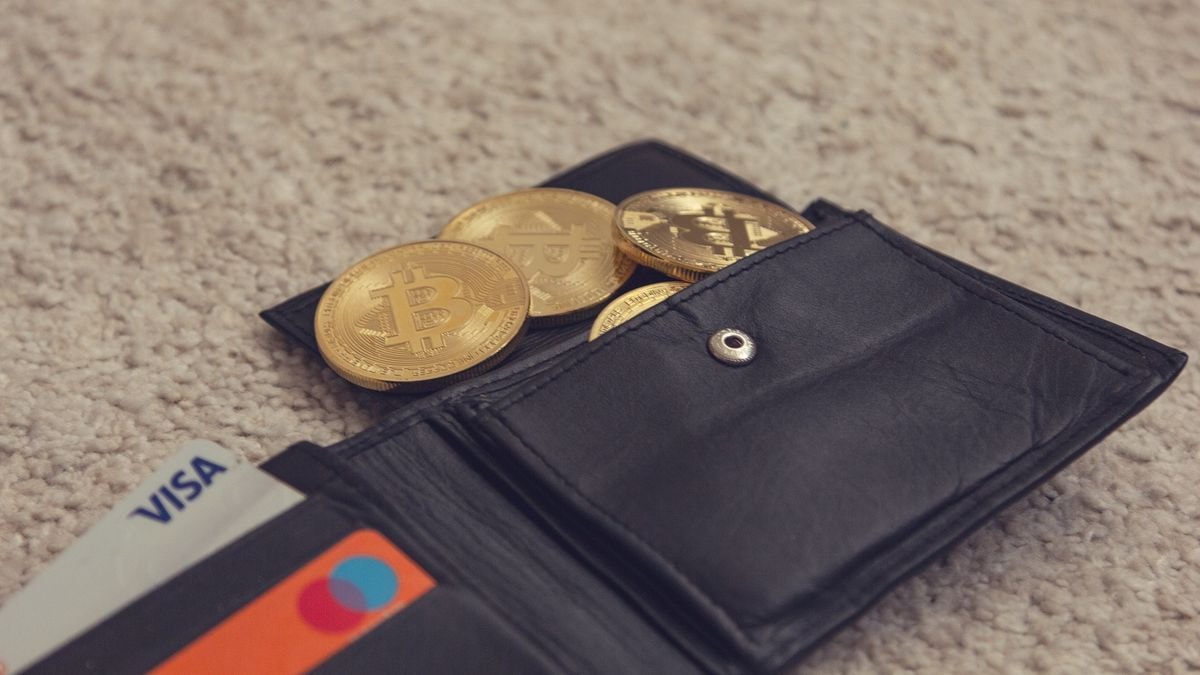
A wallet, or portefeuille in French, is software that allows you to store, send, and receive cryptocurrencies such as Bitcoin.
Private Key, Public Key
Wallets use private and public keys to manage transactions. The private key is a secret code that gives access to your funds and allows you to spend them. It must be protected by the asset holder because anyone equipped with this key could spend them.
The public key, on the other hand, is used to receive funds and can be shared publicly. It is thanks to this key that transactions are validated on the blockchain.
In summary, the private key is used to spend funds, while the public key is used to receive funds.
What Wallets Are Offered on the Paymium Platform?
The cryptocurrencies stored on your Paymium account are kept in wallets hosted by Paymium. In other words, you do not own the private key to these wallets.
On the other hand, you can choose at any time to hold your cryptocurrencies by your own means. By using such a setup, no one other than you has access to your funds. You are thus making the choice of absolute autonomy and sovereignty.
Furthermore, at Paymium, we offer to accompany you in generating a wallet for which you alone hold the private keys. On your Paymium account, go to your dashboard, then click on the “Unhosted Wallets” tab.
You will thus be able to generate a paper wallet, or paper wallet, which is a simple way to store cryptocurrencies physically by using paper as a medium. It is generally used to avoid risks related to online loss or theft of funds. It includes the information necessary to access the funds, such as the public and private keys, in printed form. It is important to keep this information safe because if someone obtains it, they could access the funds stored on the paper wallet.
The Different Types of Wallets
There are different types of wallets, each with its own advantages and disadvantages. It is therefore important to thoroughly understand the different options available to choose the one that best suits your needs.
Software Wallet (Hot Wallet)
The software wallet, or portefeuille logiciel, can be installed on a computer or a smartphone. This wallet is generally free and easy to use, but it is also more sensitive to cyberattacks because it is connected to the internet, which is what is known as a "hot wallet". It is therefore important to make regular backups of your wallet and not to store a large quantity of cryptocurrencies on a single device.
Hardware Wallet (Cold Wallet)
There is also the hardware wallet, or physical wallet, also called a portefeuille matériel, which most often resembles a USB flash drive and is designed to store cryptocurrencies. This wallet is generally safer than software wallets because it is isolated from networks and computers, thereby offering protection against cyberattacks, which is what is known as a "cold wallet". However, it can be expensive and harder to use for beginner users. The most well-known are the physical wallets from the French company Ledger or the American company Trezor.
Online Wallet (Web Wallet)
Finally, there is the online wallet, or web wallet, accessed via a web browser. This wallet is generally easy to use and accessible from any device connected to the internet. However, it is also more sensitive to the risks of cyberattacks because it remains permanently connected to the internet, classifying it as a "hot wallet". It is important to choose a reliable online wallet provider and not to store a large quantity of cryptocurrencies on a single account.
Technical Selection Criteria
To choose the right wallet for you, it is important to take into account your needs regarding security, ease of use, and cost.
- Portfolio Size: If you have a large quantity of cryptocurrencies to store, it is preferable to use a hardware wallet or a software wallet with regular backups. If you only have a small quantity of cryptocurrencies and want to be able to access your funds easily, an online wallet might be a better option.
- Asset Compatibility: It is essential to check whether the wallet you are considering supports the specific cryptocurrency you wish to use. Some wallets only support a single cryptocurrency, while others support multiple cryptocurrencies. It is also important to check if the wallet supports ERC-20 tokens if that is what you are using.
- Security Audits: It is important to check user comments and reviews to choose a reliable and popular wallet. It is also important to check if the wallet has been audited by security experts to ensure it is safe.
Which Solution to Choose?
In summary, a wallet is software that allows you to store, send, and receive cryptocurrencies. There are different types of wallets, each having its own advantages and disadvantages, and being more or less suited to each user.
To choose the right wallet, the best practice consists of taking into account your needs regarding security, ease of use, and cost, checking whether the wallet supports the cryptocurrency you wish to use, checking user comments and reviews, and confirming whether it has been audited by security experts.
FAQ
Why does Bitcoin possess value if it does not rely on anything physical?
Bitcoin's value stems from its utility as a transfer infrastructure and its absolute scarcity. Unlike traditional currencies that depend on the trust granted to an institution, Bitcoin derives its strength from its mathematical properties. Its ledger is secured by a massive amount of real energy via mining, making it unforgeable, transparent, and auditable by anyone at any time.
How is the 21 million limit of bitcoins protected?
This limit is written into the original computer code of the protocol and is defended by the network's decentralization. Each user running a full node verifies block compliance. If a player attempts to modify this rule to create additional bitcoins, their version of the software is instantly rejected by the rest of the global network, thereby protecting the asset against any manipulation.
What is the difference between Proof-of-Work and the traditional financial system?
The traditional financial system relies on a promise of value and on the creation of money through debt, which dilutes purchasing power over time. The Proof-of-Work used by Bitcoin demands an expenditure of real, past energy to validate blocks. Bitcoin thus anchors itself in the reality of physics, which prevents double-spending and the arbitrary creation of tokens.
How can a business integrate Bitcoin into its treasury safely?
A business must approach Bitcoin as a long-term diversification tool. The rigorous approach consists of allocating a minority share of its surplus, using progressive purchasing methods to smooth out prices, and going through a French or European financial intermediary duly registered with the market authorities, guaranteeing a secure and legal framework.