First published: 06/27/2023
Last updated: 04/04/2025
Investing in Bitcoin Mining: The Different Solutions
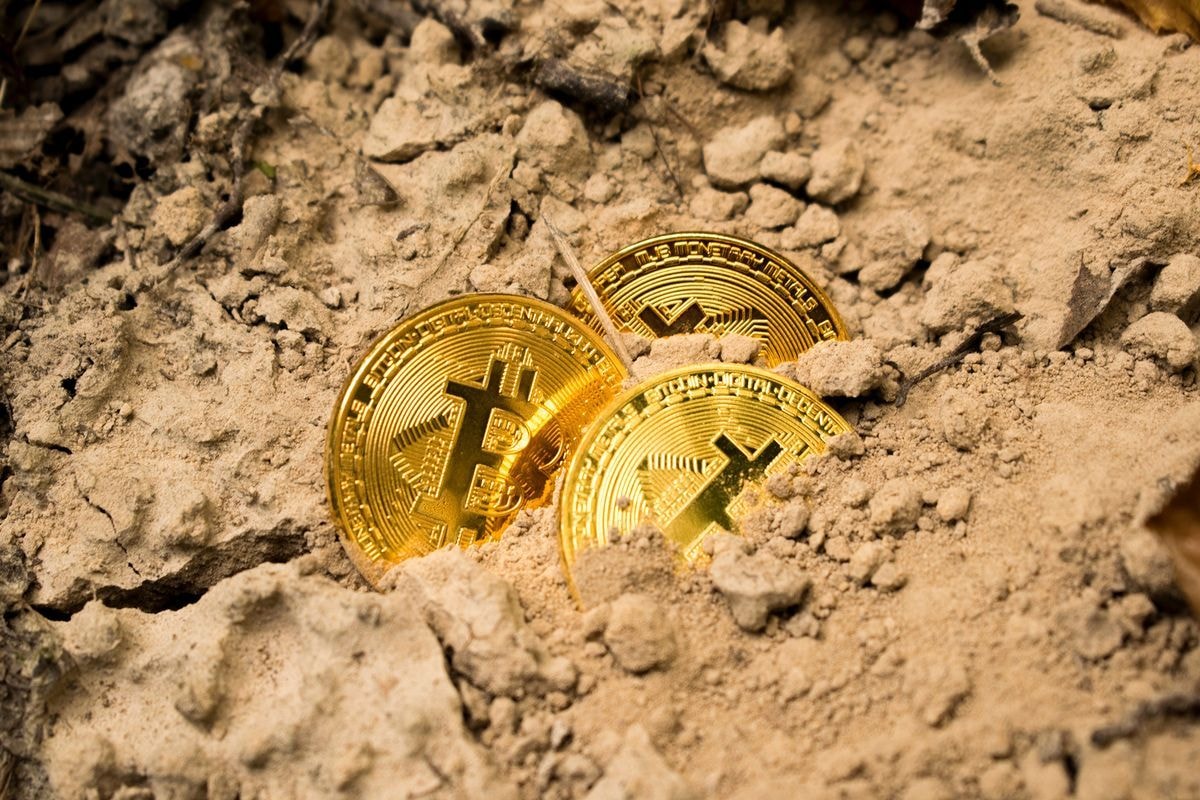
Bitcoin mining can be assimilated to the extraction of precious metals, with graphics cards and specialized processors replacing the traditional pickaxe. There are different ways to invest in mining, which are more or less capital-intensive. If you are tempted by the experience, you will find below the essential elements to understand how it works and find the appropriate method.
How Does Cryptocurrency Mining Work?
Mining is a foundational term in the cryptocurrency vocabulary. It is a mathematical process that allows transactions to be executed, verified, and permanently recorded for a certain number of decentralized networks.
In the case of Bitcoin mining, miners are put into a permanent global competition to create a valid block of transactions. The validation work consists of finding a specific random number, the hash, based on a complex mathematical formula. It is, in fact, the unique digital fingerprint of the block that matches the strict difficulty requirements of the protocol.
A multitude of combinations must be tested before finding the right result, being able to create the block, and winning the associated block reward. This process is called Proof-of-Work (PoW), and it follows a precise operational lifecycle:
- Transaction execution between two network participants.
- Integration of the unconfirmed transactions into a candidate block.
- Validation and sorting of the transactions by the computing nodes.
- Linkage using the unique cryptographic fingerprint of the previous block to ensure a linear timeline.
- Algorithmic resolution of the complex mathematical puzzle.
- Integration of the new block into the immutable ledger and immediate broadcasting across the decentralized network.
[Image showcasing a mining farm warehouse with rows of ASIC mining rigs equipped with cooling fans and heavy power cables]
The mining process requires powerful computer systems and a massive amount of energy to compute millions of equations per second. The greater the aggregate number of miners on the network, the more competitive the environment becomes.
Since the native goal of the Bitcoin system is to target the generation of exactly one block every 10 minutes to maintain global network synchronization, the protocol automatically adjusts the mining difficulty. This difficulty retargeting mechanism ensures strict control over the issuance rate of the currency supply.
Proof-of-Work: The Consensus Mode Used by Bitcoin
Consensus modes refer to the specific algorithmic protocols used to validate transactions, append new blocks to the ledger, and protect the system against attacks without relying on a central authority. Each blockchain chooses its own framework.
The two most widely used are Proof-of-Work (PoW) and Proof-of-Stake (PoS). Proof-of-Work is the original mechanism deployed by Satoshi Nakamoto when launching Bitcoin. It is a highly resilient solution for validating data in a completely decentralized system, making the history of the ledger mathematically unalterable.
Who Are the Miners?
Originally, the system was designed so that any individual with a standard home computer could mine and contribute to securing the blockchain. This democratic approach was highly viable during the early 2010s.
Nowadays, specialized industrial machines have become indispensable to carry out profitable mining operations. The ecosystem has deeply professionalized, and intense competition has made independent home mining obsolete.
It is now the domain of corporate entities occupying gigantic warehouses filled with specialized hardware, frequently investing in regions where surplus electricity is cheap and abundant, such as certain areas of the United States or Central Asia. Nevertheless, individual users can still participate in the network by pooling their operational resources through shared digital platforms.
Mining, a Rewarded Activity
For the continuous infrastructure work performed on the blockchain, miners receive financial incentives that vary depending on the asset protocol. Bitcoin miners receive a fixed block reward upon the successful validation of a block.
This reward is programmatically cut in half approximately every four years or every 210,000 blocks. This algorithmic mechanism is called the halving. Following the structural adjustments, the baseline reward sits at 3.125 BTC, to which individual transaction fees paid by users are added. The next halving event is projected to occur in 2028. Other proof-of-work protocols utilize alternative reward schedules, distributing flat commissions or variable percentages per transaction.
The Different Methods for Mining Bitcoins
Mining bitcoins requires specialized computing hardware that represents a substantial upfront capital expenditure.
Mining Cryptocurrencies with an ASIC
While some altcoins can still be mined using custom-built setups integrating multiple high-end graphics cards (GPUs), Bitcoin mining requires an ASIC (Application-Specific Integrated Circuit). These are microchips engineered for the sole purpose of solving a specific hashing algorithm.
This high-performance hardware is necessary to achieve competitive hash rates (the number of calculations performed per second) while managing electricity consumption. When evaluating mining hardware, four critical operational factors must be balanced:
- The acquisition price of the machine;
- The total hash rate (computing speed);
- The specific cryptographic algorithms supported;
- The energy efficiency (the exact ratio of energy consumption relative to computing output).
To mitigate structural risks and smooth out income variance, smaller operators typically connect their hardware to a mining pool, combining their computing power with thousands of others to win rewards more predictably.
Investing in Cloud Mining
Given the hardware acquisition barriers and high domestic electricity costs, cloud mining has grown in popularity. This model consists of renting hashing capacity directly from industrial data centers that host the physical infrastructure.
Users purchase a designated slice of processing power for a specific duration via online subscriptions. This removes the need to purchase expensive hardware, manage heat output, or possess advanced electrical engineering skills. The cloud provider manages the physical maintenance and operational energy overhead, passing these costs down through the subscription plans.
The Masternode for Mining Cryptocurrencies
Masternodes represent a specialized infrastructure layer that emerged alongside advanced network protocols. Unlike standard mining nodes, a masternode does not create new blocks; instead, it performs specialized validation, privacy, or governance functions.
A masternode operates as a dedicated full node keeping a real-time copy of the blockchain ledger. To run a masternode, an operator must prove ownership of a significant quantity of the native cryptocurrency, locking it up as collateral to ensure honest behavior. In exchange for hosting this continuous server architecture and participating in decentralized network governance, operators receive a share of transaction fees and protocol rewards.
An Alternative to Mining: Staking
For users seeking to earn cryptocurrency yields without investing in hardware or managing data setups, staking provides a software-based alternative. This mechanism is native to blockchains utilizing a Proof-of-Stake (PoS) consensus model, such as Ethereum.
Instead of deploying raw computing power to solve a puzzle, participants lock up a specific allocation of tokens in a smart contract to secure the network. The protocol algorithmically selects validators based on the size of their economic stake. Staking is structurally incompatible with pure Proof-of-Work networks like Bitcoin or Litecoin, which require physical energy expenditures to validate blocks.
FAQ
What is Bitcoin mining and how does it work?
Mining is the computing process that allows transactions to be verified, secured, and recorded on the Bitcoin blockchain without a central organ. Miners use ultra-powerful computers to solve a complex mathematical problem (Proof-of-Work) to find the unique digital fingerprint of a block, called a hash. As soon as a miner finds the solution, the new block is validated, added to the chain, and shared with the entire network.
How are Bitcoin miners compensated?
For the securing work provided, the miner who succeeds in validating a block receives a reward in the form of newly created bitcoins, to which are added the fees from the transactions integrated into that block. This reward is programmed to be cut in half approximately every four years during an event called the halving. Set at 3.125 BTC following the last adjustment, this financial incentive ensures the predictable and limited distribution of the currency.
Can an individual still mine Bitcoin profitably at home?
Today, Bitcoin mining has become highly professionalized and global competition has become extreme. It is now impossible to mine Bitcoin profitably at home with a traditional computer or graphics cards. The activity requires specialized and very expensive integrated circuits (ASICs), as well as access to very low-cost electricity. For individuals, alternatives consist of joining a mining pool to mutualize computing power or turning to cloud mining.
What is the difference between mining and staking?
The difference rests on the consensus mechanism used by the blockchain. Mining applies to networks using Proof-of-Work, such as Bitcoin, and demands physical computing power to validate blocks. Staking, on the other hand, is specific to blockchains based on Proof-of-Stake, such as Ethereum. It consists of locking up a certain quantity of tokens in a wallet to obtain the right to validate transactions and receive rewards, without requiring heavy hardware.