
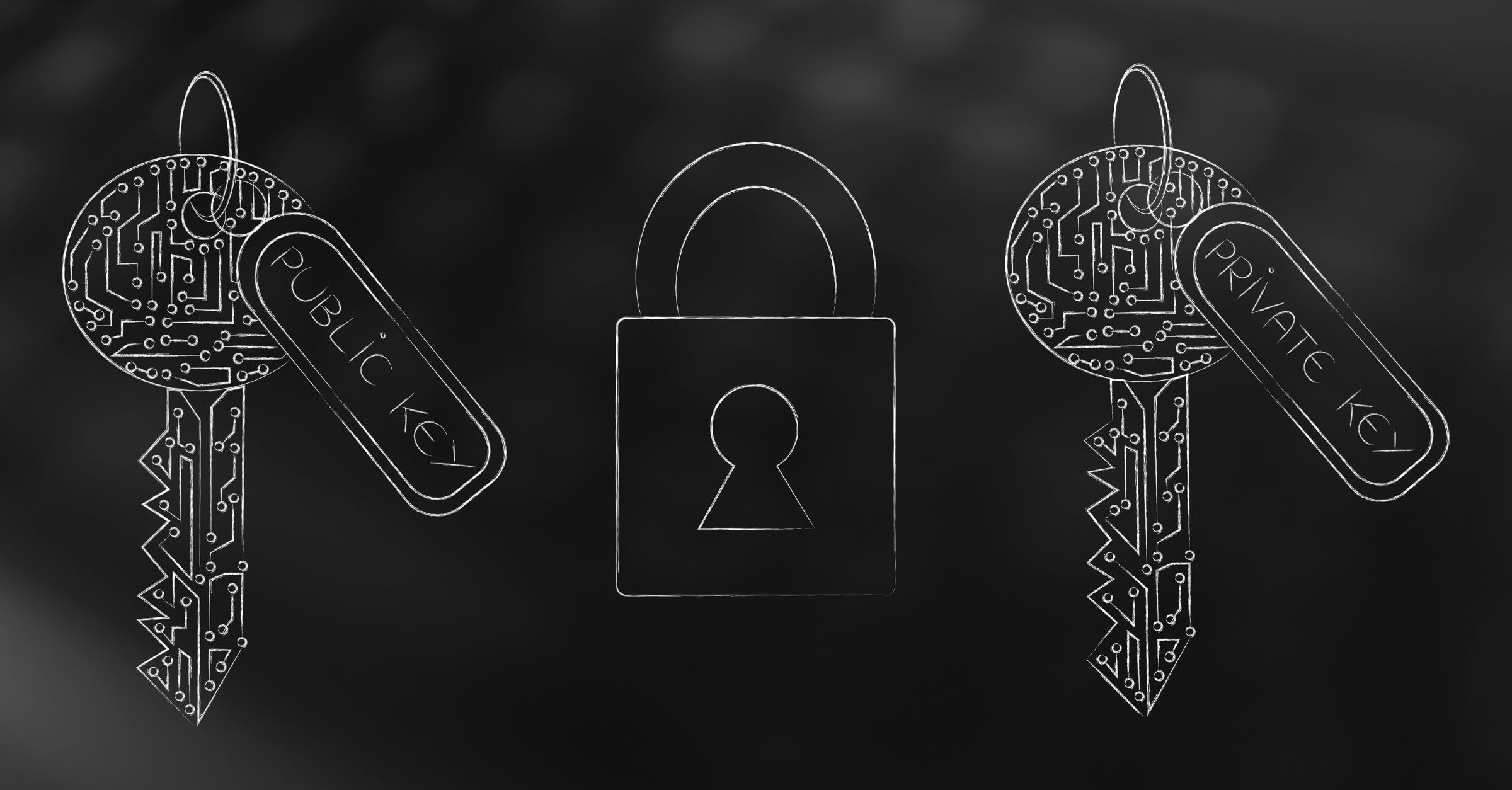
In a world where the digitalization of value is accelerating, understanding the fundamental mechanisms that guarantee the ownership and security of an asset becomes crucial. Unlike traditional financial systems, where ownership relies on intermediaries, such as banks, custodians, and states, crypto-assets rely on a radically different principle: direct possession through cryptography.
At the heart of this model lies a central element, often misunderstood yet entirely decisive: the private key. It is not limited to a mere technical tool, it constitutes the true property title of a digital asset like Bitcoin.
In a macroeconomic context marked by a rise in global debt and an increased reliance on financial intermediaries, this concept takes on a strategic dimension. It redefines the way an individual or a company can hold, secure, and transfer value.
Understanding what a private key is, how it works, and why it is essential means understanding one of the pillars of modern financial sovereignty.
The Private Key: A New Standard of Ownership
For decades, financial ownership was inseparable from a trusted third party. Holding money, stocks, or bonds necessarily involved a bank, a broker, or a custodian. This architecture enabled the development of modern markets, but it rests on an implicit assumption: that of the stability and reliability of intermediaries.
However, this assumption is being questioned today. The continuous increase in sovereign and private debt levels, combined with rising funding costs and heightened market volatility, highlights the structural fragilities of the global financial system. In this context, the question of the actual custody of assets becomes central.
Bitcoin introduces a fundamental break. Here, ownership no longer depends on a ledger kept by an institution, but on cryptographic proof. This proof relies on a unique element: the private key.
Holding a private key means holding a direct right over a digital asset, without an intermediary, without external validation, and without the possibility of dispute. It is no longer a promise, but effective control.
Understanding Concretely What a Private Key Is
Behind its apparent simplicity, the private key relies on a sophisticated cryptographic mechanism. It is a randomly generated sequence of characters that allows a unique digital signature to be produced. This signature plays an essential role: it proves that you are indeed the owner of the bitcoins you wish to use.
From this private key, a mathematical system generates a public key, which is itself transformed into a Bitcoin address. This address can be shared freely to receive funds. In contrast, the private key must remain strictly confidential.
This operational model introduces a fundamental asymmetry: it is possible to verify a transaction without ever knowing the private key that generated it. This property makes the system both transparent and secure.
In practice, this means that no one, neither a bank, a state, nor even a platform, can access your funds without your private key. Conversely, if you lose this key, no one will be able to help you recover them.
A Radically New Responsibility
This is where the true paradigm shift lies.
In the traditional financial system, security is outsourced. You delegate the custody of your assets to an institution, which assumes responsibility for errors, fraud, or losses. This delegation comes at a cost: fees, dependence, and restrictions.
With Bitcoin, this logic is reversed. Security becomes an individual responsibility. The private key is both your vault and your access key. It cannot be reset, recovered, or duplicated by a third party.
This reality may seem constraining at first glance. In truth, it is entirely consistent with Bitcoin's promise: to offer a form of ownership that does not depend on any authority. But this autonomy demands a new level of rigor. Human errors, such as loss of backups, accidental exposure, or phishing, become the primary risks. And unlike the banking system, these errors are irreversible.
Why the Private Key Is at the Heart of Financial Sovereignty
The notion of financial sovereignty is often mentioned but rarely defined concretely. Yet, it implies a simple idea: being able to freely dispose of one's assets without depending on a third party.
In our current system, this sovereignty is limited. Accounts can be blocked, transfers restricted, and assets frozen. These mechanisms respond to regulatory frameworks, but they introduce a structural dependency.
Bitcoin offers an alternative. Thanks to the private key, you can:
- Send funds without prior authorization
- Hold value without exposure to an intermediary
- Transfer assets globally in a matter of minutes
This capability is particularly relevant in an environment where international financial flows can be slowed down, filtered, or made more expensive. It also meets a growing demand for independence, observed among individuals and businesses alike. In Europe, the interest in crypto-assets fits into a broader dynamic of seeking autonomy and diversification.
From Theory to Practice: How to Use a Private Key
In reality, few users directly manipulate their private key in its raw form. Modern wallets simplify this complexity by using recovery phrases, known as seed phrases.
These phrases, composed of 12 or 24 words, allow all the keys associated with a wallet to be reconstructed. They constitute, in a way, a readable and portable version of your private key. This is why their protection is essential.
A user who masters this concept quickly understands that security does not solely depend on the technology used, but on the practices put in place:
- Storing your seed phrase on a physical medium
- Avoiding unsecure digital copies (pictures, cloud saves, text files)
- Diversifying backup locations to prevent loss from accidents like fires or floods
For larger amounts, more advanced solutions exist, such as multi-signature wallets, which require multiple keys to authorize a transaction. They allow risk to be distributed and an appropriate governance framework to be introduced, particularly within businesses.
Between Autonomy and Accompaniment: Finding the Right Balance
One of the major stakes for new entrants is finding the right level of autonomy. Managing your keys yourself offers maximum control but demands a certain discipline. Conversely, fully delegating custody to a third party simplifies the experience but amounts to recreating a dependency.
The reality often lies between the two. Professional accompaniment allows this management to be structured, secure procedures to be put in place, and the most common mistakes to be avoided. It is not about replacing individual responsibility, but about framing it.
This is precisely the zone where regulated players like Paymium bring value. By combining European compliance, operational security, and pedagogy, they allow access to Bitcoin without giving up the rigorous standards expected by retail or professional investors.
A Silent But Profound Transformation
The private key is not just a technical tool. It embodies a broader transformation: that of the relationship to ownership.
In the physical world, owning an asset often implies external proof: a title, a registry, or administrative validation. In the traditional digital world, this logic persists in the form of centralized databases.
Bitcoin proposes a different model. Ownership becomes information that you alone control. It no longer depends on an institutional infrastructure, but on a secret that you hold.
This evolution may seem abstract, but its implications are concrete. It redefines the way value can be stored, transferred, and protected. It also opens the way to new use cases, where trust no longer relies on intermediaries, but on protocols.
Conclusion
Understanding the private key means understanding what fundamentally distinguishes Bitcoin from traditional financial systems. Where the latter rely on the delegation of trust, Bitcoin relies on cryptographic proof. Where ownership is indirect, it becomes direct. Where security is outsourced, it becomes personal.
This evolution is neither trivial nor purely technical. It fits into a broader context of financial system transformation, marked by growing complexity, high debt levels, and an increased search for sovereignty.
But this promise has a corollary: responsibility. Mastering your keys means accepting full responsibility for your assets. This implies understanding, anticipating, and securing. Yet, this requirement should not be a deterrent. It can be accompanied, structured, and professionalized.
This is the logic behind Paymium’s approach: allowing everyone to access Bitcoin within a clear, secure framework that complies with European standards, while retaining the essential: understanding and control.
FAQ
Can a private key be recovered if it is lost?
No. There is no recovery mechanism. This is what guarantees the security of the system, but it is also what imposes rigorous management.
Is it risky to manage your keys yourself?
The risk exists, but it can be managed with good practices. The majority of incidents stem from human errors, not technical flaws.
What is the difference between a private key and a seed phrase?
The seed phrase is a simplified representation that allows multiple private keys to be generated. It is currently the standard for modern wallets.
Is it absolutely necessary to hold your keys to invest in Bitcoin?
Not necessarily. But understanding this principle remains essential to evaluate the different levels of security and control.
Why is this subject becoming strategic today?
Because the question of actual asset custody becomes central in a more uncertain and highly intermediated financial environment.